Rendezvous with the Fire and Ice Symposium: The Stories We Tell
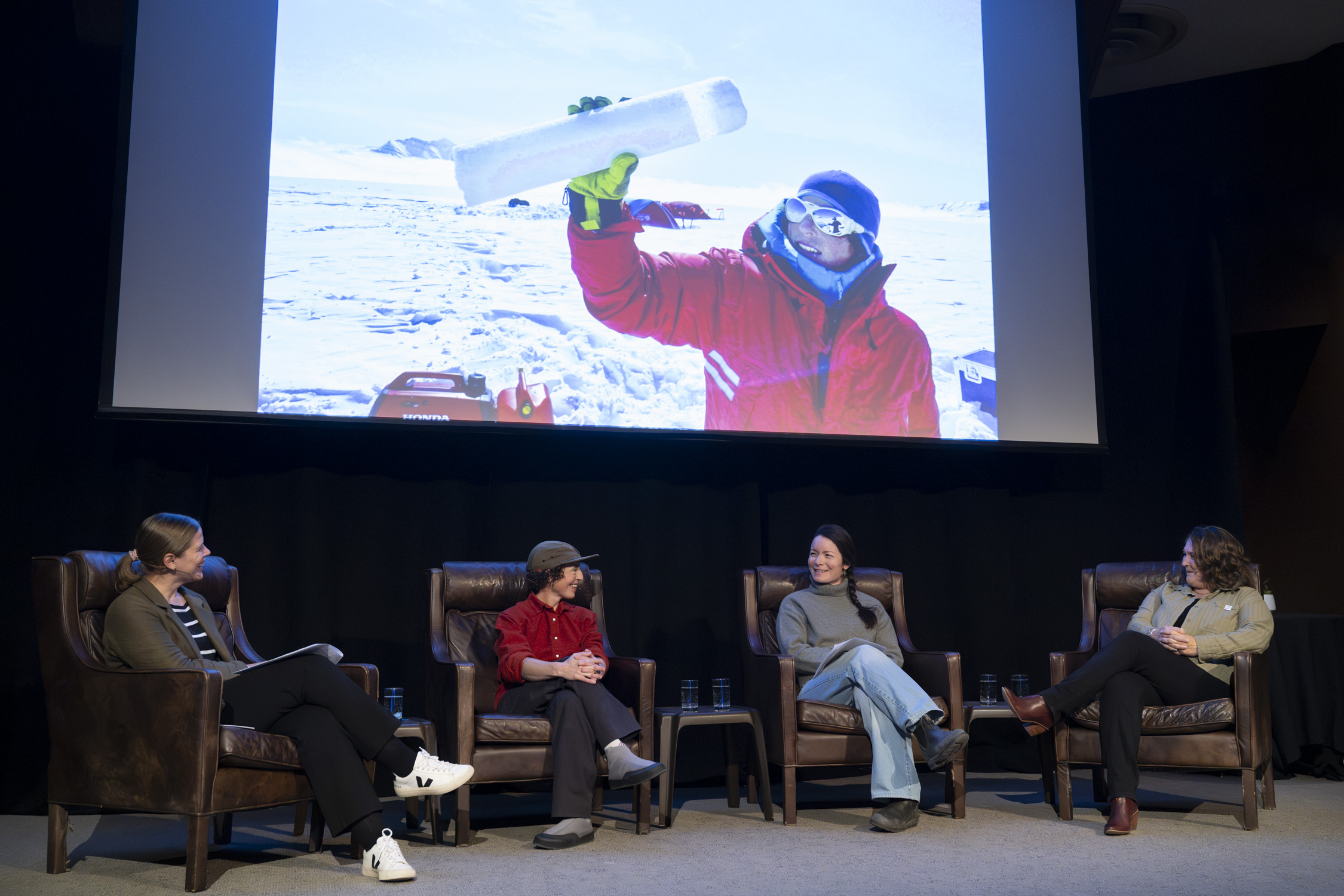
L-R: Colette Derworiz, Dr. Alison Criscitiello, Jocelyn Hirose, and Dr. Corinne Schuster-Wallace. Photo by Abigaile Edwards.
The 2025 Banff Centre Mountain Film and Book Festival hosted the Fire and Ice Symposium: The Stories We Tell on November 4th and 5th in Banff.
After noting a shift in narratives through film and book submissions from more traditional adventure stories to environmentally conscious stories, highlighting our changing planet, the Festival honoured the land and waterways at its 50th anniversary. The series of events brought together scientists, authors, filmmakers, storytellers, educators, and community leaders to share why stories of fire and ice matter.
Article by Yash Chhabria
Day 1
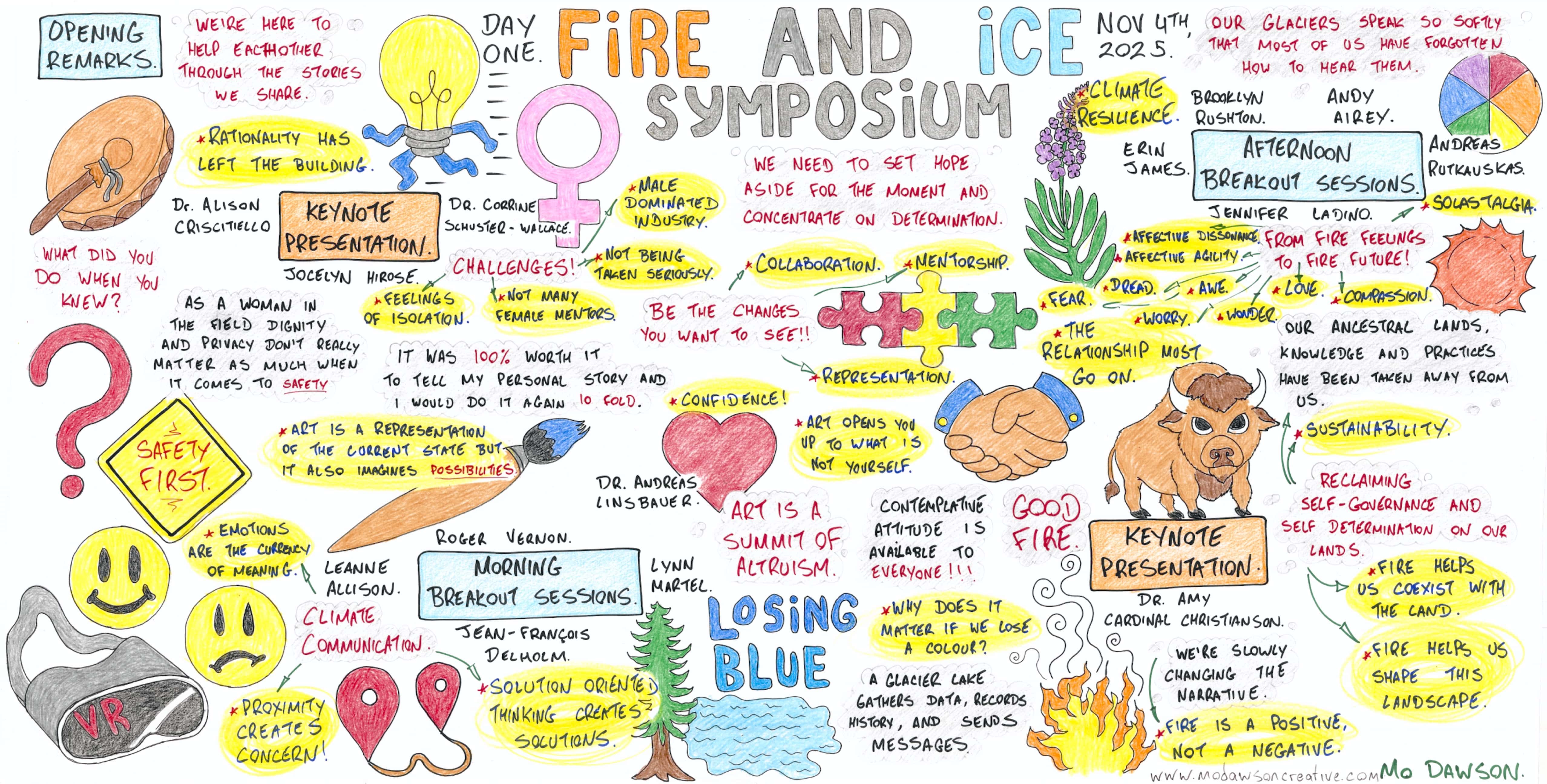
Fire and Ice Symposium Visual Recording by Mo Dawson
Welcoming the visitors to the land, Daryl Kootenay of the Stoney Nakoda Nation, in the Treaty 7 Territory of Southern Alberta, briefed the audience about the Stoney Nakoda Nation and left everyone spellbound with his melodious prayer.
Wasting no time, Robert Sandford, Senior Government Relations Liaison, Global Climate Emergency Response, United Nations University Institute for Water, Environment and Health, made it clear in his opening remarks, or rather an alert, that we need to pay urgent attention to the broken systems that are dismantling the biological ecosystem. Showing a mirror to the audience and making an appeal for action, he said, “Right now, in our time, imagining those stories before it is too late may be our most urgent collective action.”
While the audience was settling from the unsettling warning from Sandford, the Women on Ice panel with Dr. Alison Criscitiello, Jocelyn Hirose, Dr. Corinne Schuster-Wallace, and moderator Colette Derworiz kicked off the first event of the day with their contribution towards uplifting women in glaciology. Sharing the passion for art and science, they collaborate with local and international groups to drive change and advocate for artistic expression. Girls* on Ice Canada co-founders, Chrisitiello and Hirose run programs, interweaving science, art and adventure to inspire next generation of girls and transgender, agender, Two Spirit, nonbinary, intersex, and genderqueer youth.
In a choose-your-own-adventure model, the audience had a choice between a panel of storytellers employing different media forms to tell stories of glaciers and a scientific exploration of the Swiss Alps through extended reality (XR).
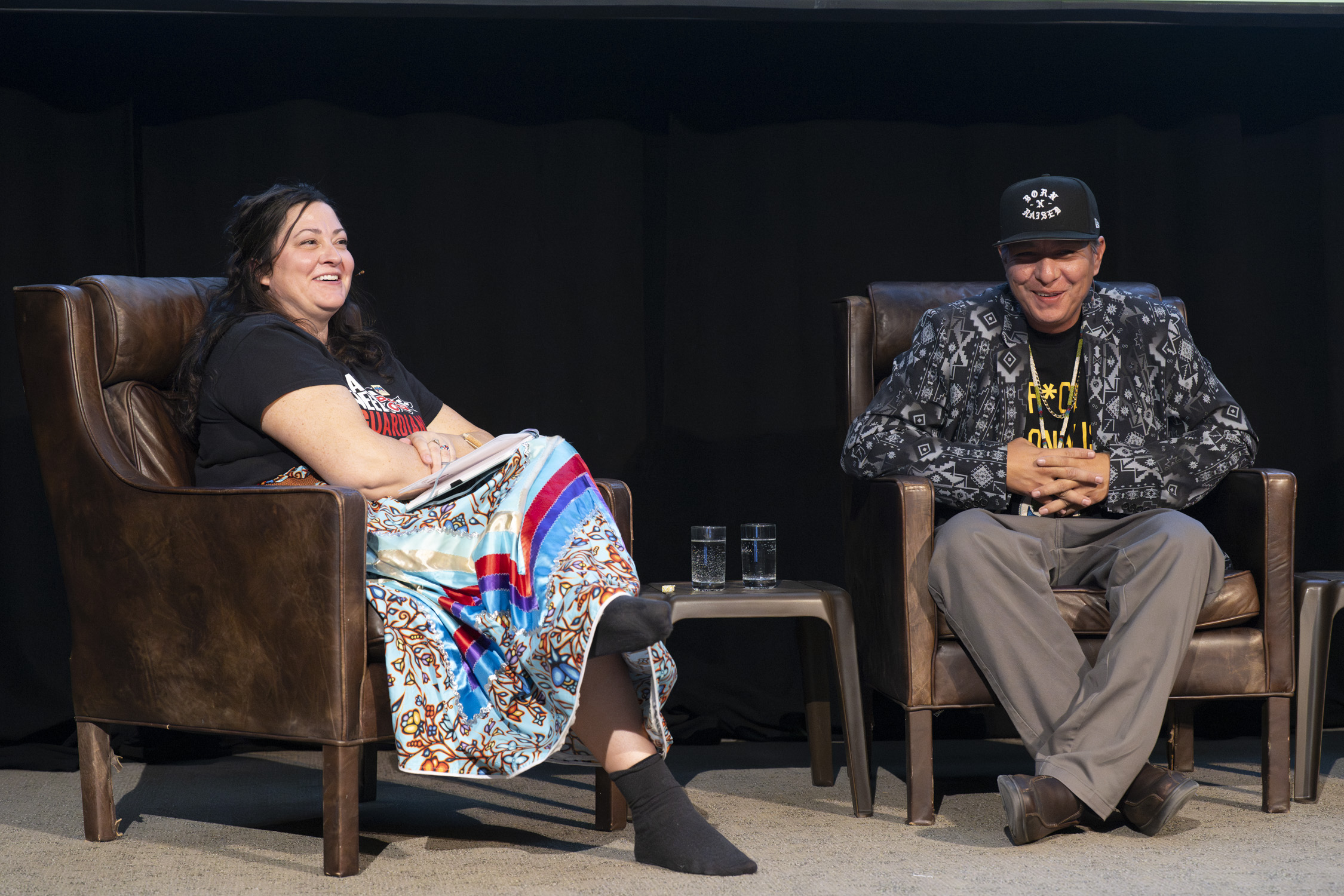
Dr. Amy Cardinal Christianson in conversation with Alvin First Rider. Photo by Abigaile Edwards.
Storytelling has evolved, and people are seeking new ways to form connections and stay grounded. Dr. Amy Cardinal Christianson (Métis from Treaty 8 territory) connects with people through her podcast, Good Fire. During the live podcast interview at the Symposium, she spoke to Alvin First Rider (Blood Tribe) and Jordan Melograna, debunking the myths around cultural burning and decolonizing land management. “We hear it so many times, ‘Indigenous people have lost their fire knowledge.’ Really, our knowledge was taken away from our nations through systemic racist campaigns, fire exclusion, looking at Indigenous fire knowledge as less, residential schools, the Indian Act, that kept us away from the land,” said Cardinal Christianson. First Rider’s work as the Environmental Manager for the Blood Tribe Land Management includes reintroduction of fire and bison to the landscape that was suppressed due to colonial policies. “Being able to reignite that connection has been an expression of sovereignty,” said First Rider.
“There was a purpose of fire—to shape our landscape.”
ALVIN FIRST RIDER; Environmental Manager, Blood Tribe Land Management
When Marshall McLuhan coined the phrase, "the medium is the message," he brought awareness and a peek into today’s world of media expressionism. Media can alter your emotions or evoke a call to action, and exploring this phenomenon, Erin James, Jennifer Ladino, and Andreas Rutkauskas facilitated a hands-on workshop to record participants’ reactions to media representations of wildfire. In the other breakout room, the participants followed thematic learning journeys of people with lived climate change experience from Jasper, Wood Buffalo, Interior BC, and the Piikani First Nation with facilitators, Brooklyn Rushton and Andy Airey from The Resilience Institute.
The Banff Centre Mountain Film and Book Festival is known for its adventure stories, but with great adventure comes even greater responsibility. Børge Ousland and Vincent Colliard took the evening stage, validating this idea of being responsible adventurers through their tales from the IceLegacy project. “You need someone who goes out there into those icy landscapes… and comes back with stories, with impressions and images and emotions from the field. Because if you’re a part of the problem, you should also be part of the solution,” said Ousland.
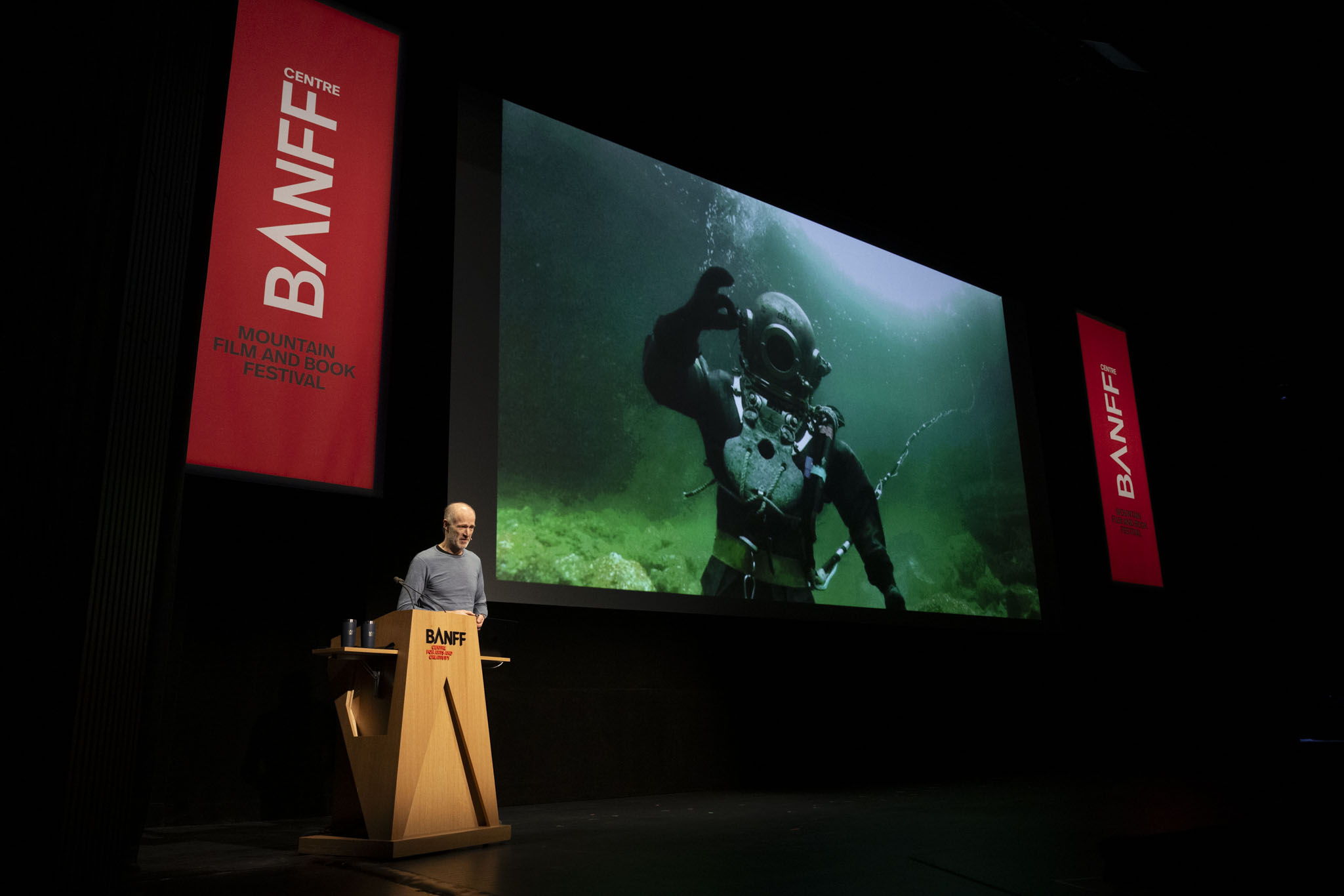
Børge Ousland presenting his IceLegacy project. Photo by Rita Taylor.
“You need science to make the right decisions, but you also need adventure.”
BØRGE OUSLAND; Polar Explorer and Co-Founder, IceLegacy Project
Any Festival night in Banff is incomplete without films. A selection of films premiered with a focus on the exploration of the global ecological shift and stories of resilience after turmoil caused by calamities from climate change. Banff Centre Mountain Film and Book Festival and Adventure Filmmakers Workshop alum, director Trixie Pacis, and aerial performer and filmmaker, Sasha Galitzki’s Embers had its world premiere with a surprise aerial performance by Galitzki on the stage.
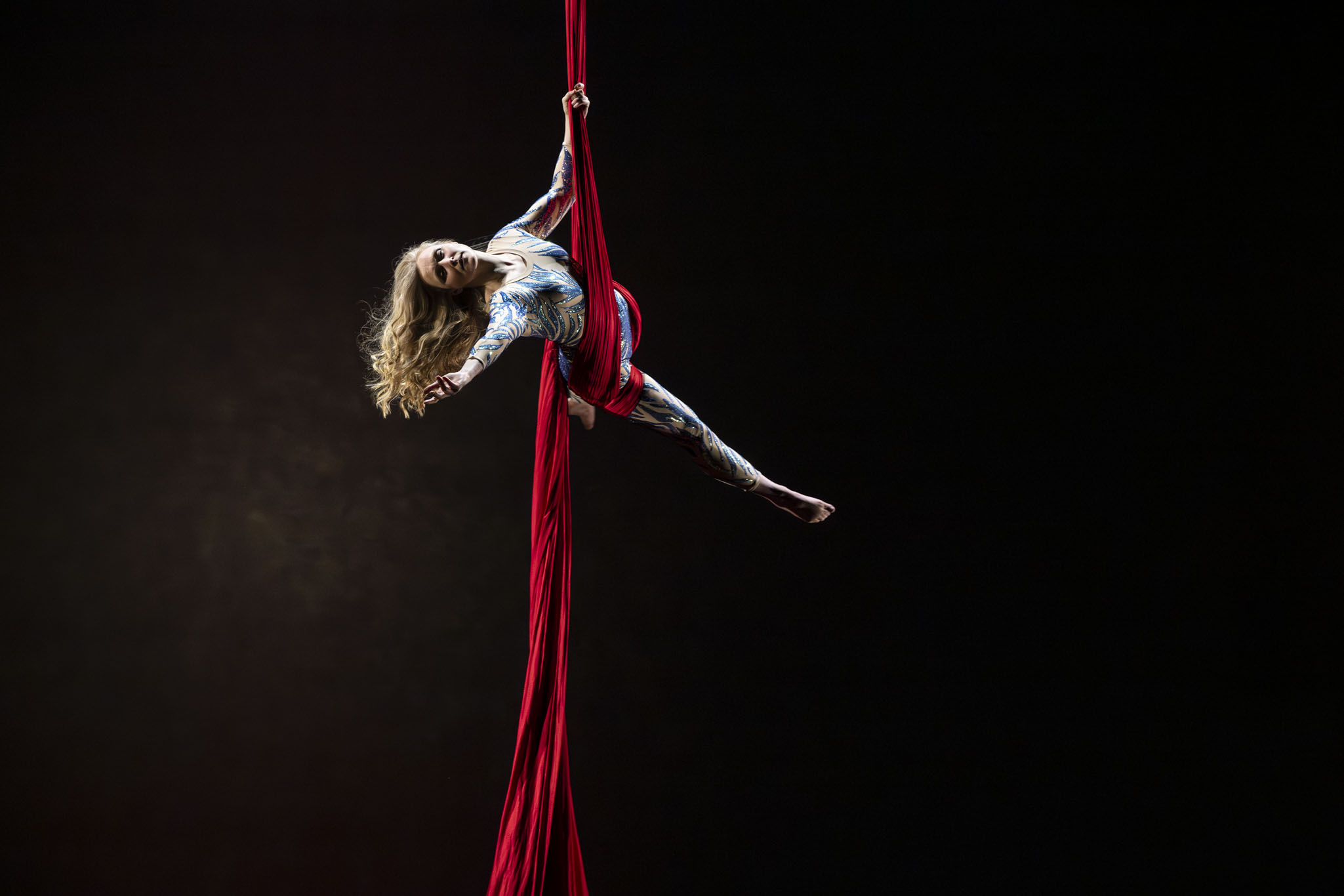
Sasha Galitzki performing an aerial act after the world premiere of Embers. Photo by Rita Taylor.
Day 2
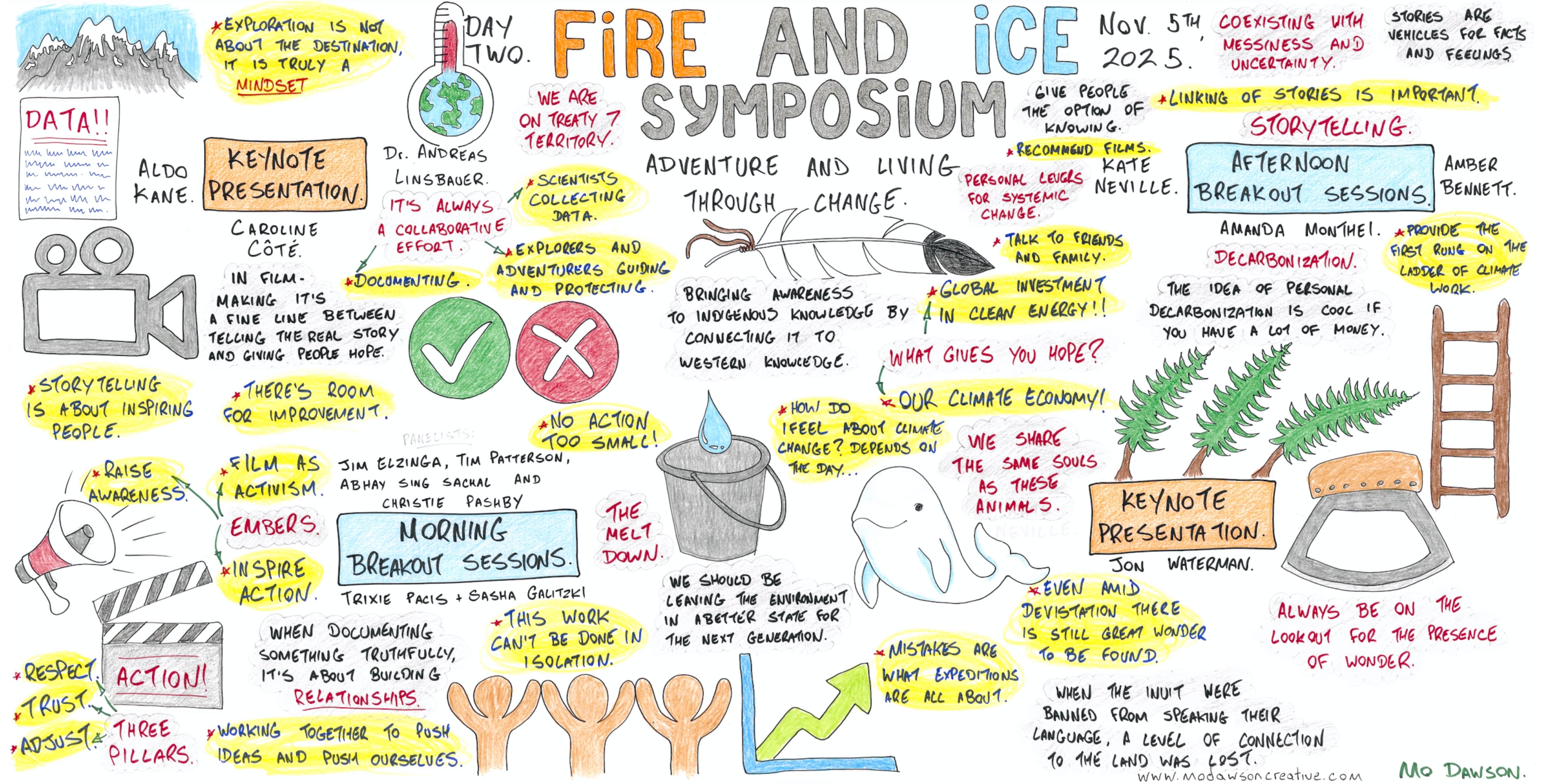
Fire and Ice Symposium Visual Recording by Mo Dawson
How often do the worlds of adventurers and scientists collide? Each has the expertise that the other does not possess, but the sentiment of accountability in the outdoors calls for a unique collaboration. Day two of the Symposium inspected the ingredients required for such an association of explorers and scientists in telling stories of adventure. Panelists Aldo Kane, Caroline Côté, and Dr. Andreas Linsbauer have wildly different backgrounds, but what brings them together is their concern for climate change and raising awareness. “Storytelling is about inspiring people,” said Kane.
Stories of climate change are not just pure statistics in academic papers, but loss, grief, and fear in the hearts of millions of individuals who have experienced it first-hand. One such story is of Sasha Galitzki, who lost her home in the 2024 Jasper wildfire, told in a poetic form through the film Embers. Galitzki and Pacis engaged the audience during the breakout session with their story of compassion and commitment to truth in times of distress and challenge.
As individuals, do we have any power, any control over the narrative of the future? As a juggernaut of a task it may seem, community leaders like Jim Elzinga, Tim Patterson, Abhay Singh Sachal, and Christie Pashby are working with their communities to rehabilitate the ways people interact with nature. Participants in their breakout session received tools on how they can reach out to local communities, trying to make a difference, and capture stories that matter to them.
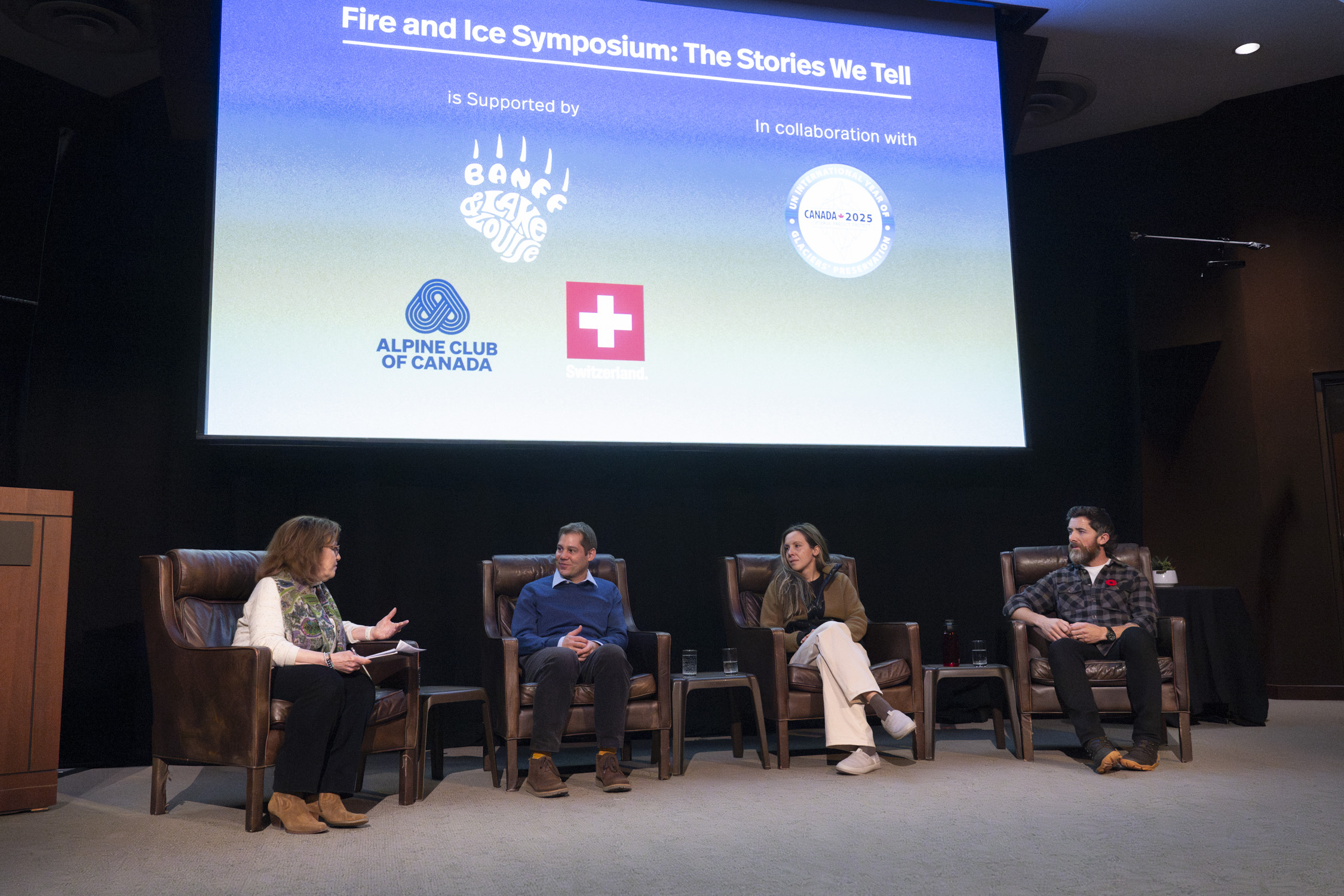
L-R: Rebecca Martin, Dr. Andreas Linsbauer, Caroline Côté, and Aldo Kane. Photo by Abigaile Edwards.
The ever-avid storyteller, Jon Waterman, invited the house to follow him on his chronicles of the Alaskan Arctic, carefully documented in his new book, Into the Thaw: Witnessing Wonder Amid the Arctic Climate Crisis. The landscape, so fragile, has seen immense transformation in the last 30 years since his last visit—leaving him heartbroken. His eyes could not recognize the very place where he stood on his last visit. He observes and reflects through imagery and notes he made during his trips inspiring people to stop for a moment and think about this change and speak out.
The way to move forward is to adapt to the changes in the environment—"the good old days” are gone, and reality can be discouraging. In an attempt to give hope, Kate Neville, Amanda Monthei, and Amber Bennett, along with moderator Graham Zimmerman, shared ways to be together during their breakout session.
“People want to belong to a community. Give people an invitation into belonging. People want to understand the world around them. People are motivated by understanding, by a sense of control, want to enhance themselves, want to be seen as a good person, and want to trust others and be trusted. For activating those levers, stories are probably one of the simplest and most powerful ways to activate all those things at the same time.”
AMBER BENNETT; Executive Director, Re.Climate at Carleton University
While the landscape is changing, how do you go about interacting with nature and continue with the adventure while it is vulnerable? Ignacio Palomo, Kate Hanley, and Marc Pons, with moderator Graham McDowell, brought perspectives from mountain guides, nature-positive adaptation, and human connections from mountainous regions around the world, and how to be engaged in climate communication.
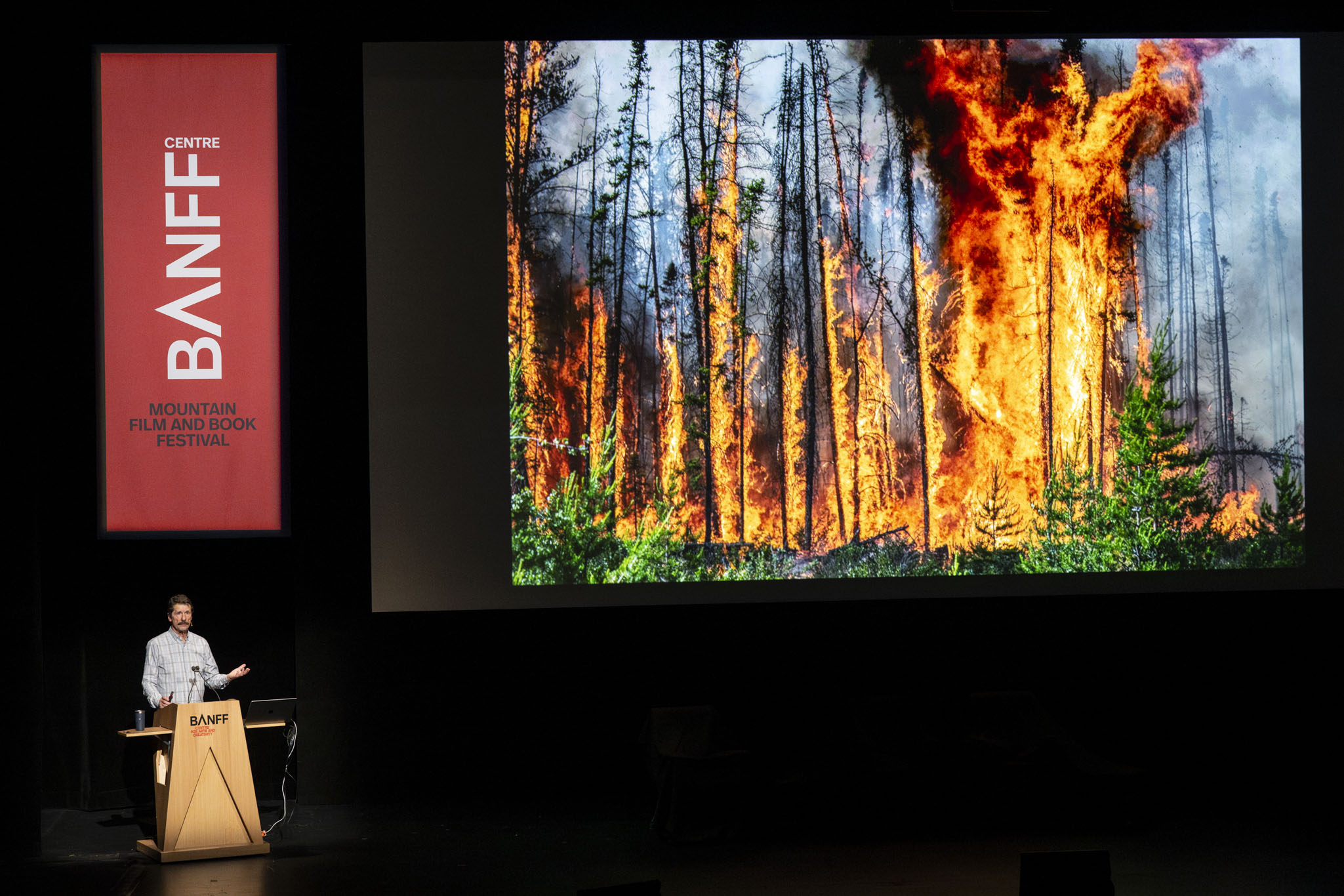
James Balog presenting his Extreme Ice Survey Project. Photo by Rita Taylor.
Concluding the Symposium, photographer James Balog presented the Extreme Ice Survey project—compelling visual evidence of receding glaciers through his 15-year project cataloging over a million images. His presentation was followed by the screening of his new film, Chasing Time, directed by Jeff Orlowski-Yang and Sarah Keo, following Balog and his crew capturing behind the scenes of the Extreme Ice Survey.
“Inside, very human—is a deep appreciation for blue sky, flowing water, and green leaves.”
JAMES BALOG; Photographer and Founder, Extreme Ice Survey
The symposium was two days of rich conversation, connection, and we sincerely hope that attendees left feeling inspired and courageous to tell stories in new and impactful ways.
In collaboration with
Fire and Ice Symposium Sponsors: