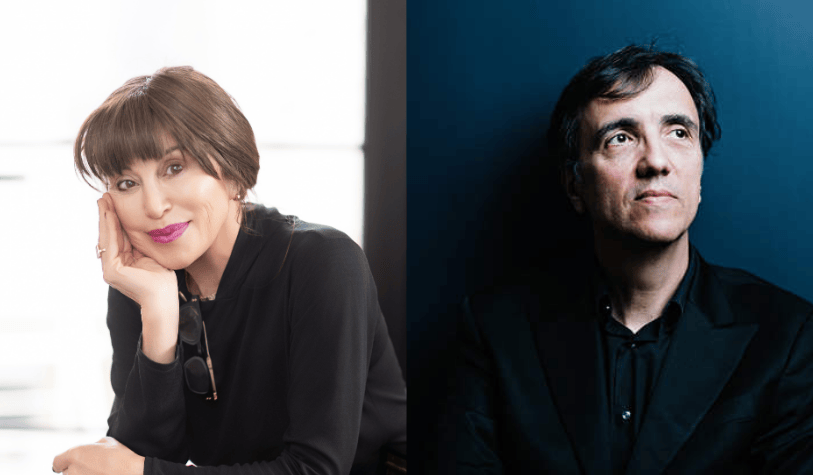
Tema Blackstone, photo by Linda Li Photography. Éric Le Sage, photo by Nicolas Gueri.
Run Time
105 minutes
Intermission
15 minutes
Audience Advice
Please turn off all cellphones, photo/video cameras.
Eric Le Sage
Gabriel Fauré: Thème et variations, Op. 73 (Theme and Variations in C-sharp Minor) (10′)
Gabriel Fauré: Nocturne No. 6 in D-flat Major, Op. 63 (6′)
Tema Blackstone & Hung-Kuan Chen
Franz Schubert: Rondo in A Major, D. 951
Hung-Kuan Chen
Frédéric Chopin: Polonaise-Fantaisie in A-flat Major, Op. 61
Intermission
Owen Dodds
Owen Dodds: Piano Sonata "American Dreams"
I. Overture and Scherzo
II. Aria and Incantation
III. Fiddle Tune
Piano Sonata: American Dreams was commissioned by Owen's mentor Gilbert Kalish on the occasion of his 90th birthday. Gil is something of an American piano icon, having championed the works of George Crumb, Charles Ives, Aaron Copland and many others. Long before Owen met Gil and became his piano student, Owen revered his recordings, and played pieces bearing his name as the dedicatee. Composing a piece for Gil was beyond Owen's wildest (American) dream.
The sonata is divided into three movements, connected without pause. Each new movement picks up where the previous movement leaves off, taking the same material but introducing a new flavor. Drawing many characteristics from American folk music, including blues and Appalachian fiddle music, American Dreams is a celebration of the plurality of the American identity.
Trinity Fan
Trinity Fan: Variations on “In a Sentimental Mood”
Variations on “In a Sentimental Mood” is a contemporary reimagining of Duke Ellington’s iconic jazz standard. The work consists of eight variations that trace a journey from the song’s traditional jazz roots into increasingly complex and "disorderly" territory as each variation progresses. Along this stylistic trajectory, the music visits the lush harmonies of Impressionism, the mystical textures of Scriabin, and the rhythmic vigor of 20th- and 21st-century composers. The set concludes with a high-energy synthesis, weaving Ellington’s themes into the primitive, driving textures of Igor Stravinsky’s The Rite of Spring. Throughout the work, several variations offer the performer the choice to either play the written notes or expand upon the provided motifs through their own spontaneous interpretation.
Theme: An introduction of the main melody (A section) in its original, lyrical jazz style. The theme should be performed out of time in a fluid, freeing manner, and the pianist may improvise additions to what is already written.
Variation 1: A stylized jazz solo over the main theme. The performer is encouraged to either play the written solo or improvise their own over the provided chord changes.
Variation 2: The music begins to drift away from traditional jazz, briefly introducing the hazy, colorful harmonies and slight dissonances associated with Impressionism.
Variation 3: A return to a traditional jazz feel, this time introducing the second theme (B section) of the standard.
Variation 4: A full immersion into an Impressionist soundscape. This variation explores how Ellington’s melody might have sounded if influenced by Claude Debussy.
Variation 5: This section uses complex, shifting rhythms and frequent time signature changes to "mask" the original themes, drawing inspiration from the rhythmic clarity of Nahre Sol.
Variation 6: A continuation of the rhythmic complexity from the previous variation but shifted to the lower registers of the piano. This section evokes the atmospheric soundscapes inspired by the Legend of Zelda: Breath of the Wild soundtrack. The performer may choose to improvise a designated section based on the style of the variation with its original motifs.
Variation 7: A mysterious and ethereal atmosphere free of time and bar lines. The performer is invited to improvise within this style using the original melodic fragments.
Variation 8: A driving blend of both Ellington themes with the iconic rhythms of Stravinsky’s The Rite of Spring, with optional improvisation. The piece concludes with a powerful finale that mimics the ending of The Rite of Spring, with the jazz themes intricately woven into the final, percussive chords.
Alex Glass
Alex Glass: Just Beyond Reach (world premiere)
Alex Glass: Barcarolle (Canadian premiere)
Written specifically for the Banff Art of Piano program, Just Beyond Reach is a piece that intends to push the limits of my own pianistic ability, featuring complex interlocking patterns, bold harmonic changes, and high-stakes improvisation.
Barcarolle was written in fall 2022, during my first semester studying composition in New York. The piece is deeply personal and introspective, and represents for me a period of shattered confidence, uncertainty about my future, and gradually finding my footing in a new city.
About the Program
There will be a 20 minute intermission
Please turn off all cellphones, photo/video cameras.
Art of Piano is generously supported by lead donor Heather Edwards.
Additional support provided by the Alice and Betty Schultz Scholarships Endowment Fund for Dance and Music, Helen Graham, and the Yolanda Freeze Master Artists Music Fund.
Further support by Tom Lee Music.
Biographies
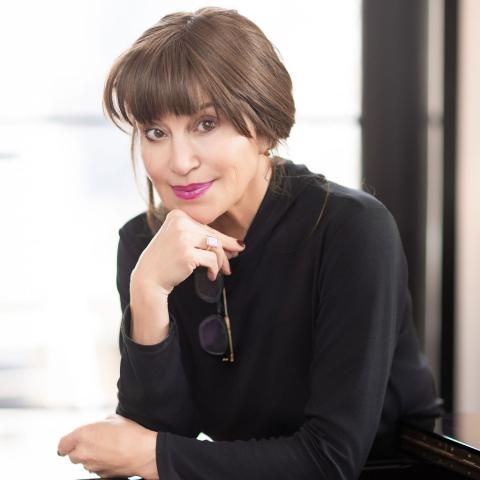
Tema Blackstone
Tema Blackstone is a dedicated pedagogue, performer, and arts leader. As a faculty of The Juilliard Pre-College Division and President of the Artemisia Foundation NYC, she teaches and lectures in a wide range of settings. At the core of Blackstone’s pedagogy comes from her unique perspective emerging from a strong background in ballet, voice and theatre. She believes interdisciplinary experiences create holistic artists.
Blackstone has presented master classes and lectures at Yale, the International Piano Festival in Shanghai, the Association of Professional Music Teachers in North America, and in summer festivals such as Vivace, Banff, MMB, Chinese Foundation and Aspen. Blackstone has served as an adjudicator for major competitions such as the Honens, Young Concert Artists, Shanghai International, and Steinway among others. She is a former faculty member at NEC and Shanghai guest professor. Her students include, Yuja Wang, Niu Niu, Maxim Lando, and Wilson Liu.
As President of the Artemisia Foundation, Blackstone has produced 85 performances and masterclasses nurturing young talented pianists. Artemisia's mission is to expose young artists to new experiences from a wide variety of mentors ranging from artists to business leaders. Through Juilliard, Yale and the International piano festival in Shanghai, she has been instrumental in securing hundreds of thousands of dollars in financial and grant support for emerging artists while establishing significant institutional partnerships such as the acquisition of the first Fazioli concert grand in Canada. In 2022 she and Heather Edwards collaborated with the Banff Centre to re-invigorate the piano program, where she teaches and performs each summer.
Blackstone maintains an active performing career, with recent duo and solo appearances in major venues including Shanghai Concert Hall, Jordan Hall, Carnegie Hall, Roy Thompson Hall, Barbican, Suntory, Taipei Performing Arts Centre and others with her husband, Hung-Kuan Chen. She has also collaborated with artists such as Janos Starker, Jon Kimura Parker, and Menahem Pressler & Denes Zsigmondy & numerous chamber ensembles worldwide.
Blackstone received her ARCT, Bachelors, Master's, and DMA under the tutelage of pedagogues such as Anthony Di Bonaventura, Russell Sherman, & Hung-Kuan Chen. She is a Steinway artist.
Image by Linda Li
Faculty
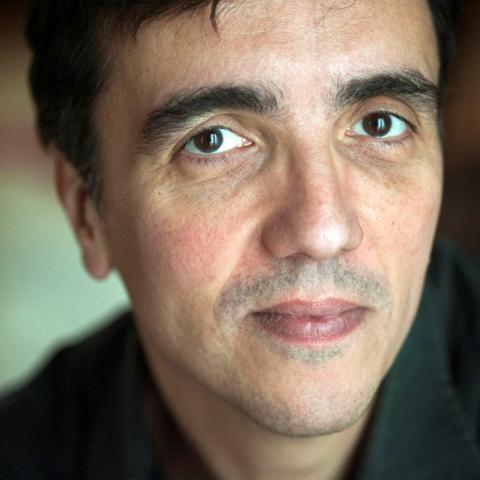
Eric Le Sage
Eric Le Sage is established as a famous representative of the French piano school, regularly boasted for his very subtle sound, his real sense of structure and poetic phrasing. Already when he was 20 years old, the Financial Times had described him as “an extremely cultivated disciple of the great French tradition of Schumann piano”. In 2010, die Zeit, praised his “ideal French piano aesthetics and clarity”.
Eric is invited to perform as a soloist with orchestras at the highest level such as the Los Angeles Philharmonic, Philadelphia Orchestra, Toronto Symphony Orchestra, Saint-Louis Symphony Orchestra, Berlin’s Konzerthaus Orchester, SWR Symphony Orchestra, Bremer Philharmoniker, Dresden Philharmonie, Royal Scottish National Orchestra, Göteborg Symphony Orchestra, Rotterdam Philharmonic, NHK Symphony Orchestra, Yomiuri Nippon Symphony, Tokyo Metropolitan Orchestra, Münchner Kammer Orchester, Dresdner Philharmonie, Orchestre Philharmonique de Radio France, Orchestre National de Bordeaux-Aquitaine, Queensland Symphony Orchestra, Orchestre Métropolitain, Chamber Orchestra of Europe, with conductors like Edo de Waart, Stéphane Denève, Pablo Gonzalez, Fabien Gabel, Sir Jeffrey Tate, François Leleux, Alexander Liebreich, Kazuki Yamada, Alondra de la Parra, Lionel Bringuier, François Leleux, Michael Stern, Leonardo Garcia Alarcon, Sir Simon Rattle and Yannick Nézet-Seguin.
Eric has performed recitals and chamber music concerts in major venues across the world such as Wigmore Hall, Suntory Hall, Carnegie Hall, Hamburg’s Laeiszhalle, Paris Philharmonie, Théâtre des Champs-Elysées, Radio France, Cologne Philharmonie, Essen Philharmonie, Dresden Philharmonie, Frankfurt’s Alte Oper, Amsterdam’s Concertgebouw, Schwartzenberg’s Schubertiade, Salzburg Mozarteum, Ludwigsburg Festival, Prague’s Rudolfinium, Taipei National Concert Hall, Konzerthaus Vienna, Luxembourg Philharmonie, Dublin’s celebrity series, Edinburgh International Festival, Düsseldorf Tonhalle, la Roque d’Anthéron Festival, Potsdam Sanssouci, Brussels’ Bozar, Berlin’s Boulezsaal, Konzerthaus Berlin, Berlin Philharmonie.
Eric Le Sage released many albums, all of which were critically acclaimed and received multiple awards. Besides his world-famous Schumann cycle in 2010 that were awarded the very prestigious Jahrespreis der deutschen Schallplattenkritik, other milestones include Francis Poulenc's complete chamber works with piano (BMG, 1998), Fauré¹s complete works for chamber music with piano, and Brahms complete chamber music works (B-Records, 2021).
Two magnificent albums were released in 2022: A Mozart album under the baton of his longtime stage partner François Leleux and the Gävle Symphony Orchestra on Alpha (concertos n° 17&24) and a solo album on Sony Classical featuring rare French repertoire from the beginning of the 20th century. In the last few years Eric released Fauré’s complete Nocturnes on Alpha (2019) and Beethoven's last 3 Sonatas (2014). Other recent chamber music recordings include collaborations with such artists as tenor Julian Pregardien for a Schumann album (2019) or Emmanuel Pahud, Paul Meyer, Daishin Kashimoto, Aurélien Pascal and more for albums around repertoire from Vienna in the 1900s, and works by Nino Rota.
A true chamber music lover, Eric regularly plays with friends like Emmanuel Pahud, Paul Meyer, Quatuor Ebène, François Leleux, Jean-Guihen Queyras, les Vents Français, François Salque, Lise Berthaud, Daishin Kashimoto, Claudio Bohorquez, Julian Prégardien, Sandrine Piau, Olivier Latry and many other musicians.
Born in Aix en Provence, Eric Le Sage was the winner of major international competitions such as Porto in 1985 and the Robert Schumann competition in Zwickau, in 1989. He was also a prize-winner at Leeds International competition the same year, which allowed him to perform under the baton of Sir Simon Rattle. Eric Le Sage is Professor at the Hochschule für Musik in Freiburg, Germany.
Faculty
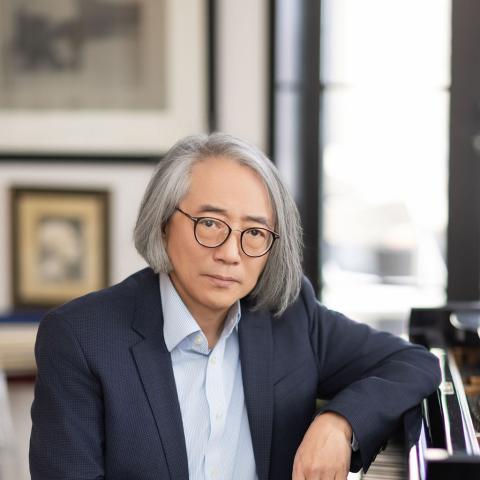
Hung-Kuan Chen
Hung-Kuan Chen was born in Taipei and raised in Germany. His early studies fostered strong roots in Germanic Classicism tempered with the sensibility of Chinese philosophy. The winner of the Ferruccio Busoni International Piano Competition and Young Concert Artists International Auditions and the recipient of an Avery Fisher Grant, Chen has collaborated with conductors including Christoph Eschenbach and Hans Graf, and his colleagues include the Tokyo and Shanghai string quartets, cellist Yo-Yo Ma, violinists Cho-Liang Lin and Roman Totenberg, clarinetist David Shifrin, and pianist Tema Blackstone.
Image by Linda Li
Faculty
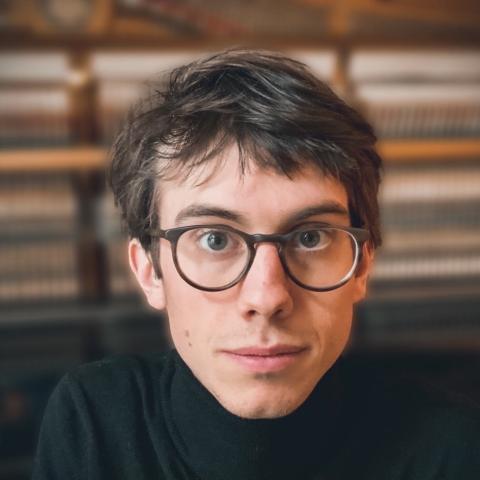
Owen Dodds
Owen Dodds was generously supported by the Helen Graham Artist Award.
American pianist and composer Owen Dodds leads a diverse and stimulating musical life, driven by his desire to share the music he enjoys. A native of North Carolina, Owen currently resides in New York City, where he performs as classical soloist, chamber musician, song writer, and composer. He has recently appeared in venues such as Carnegie Hall, Steinway Hall, Lincoln Center’s Clark Studio Theatre, and Rockwood Music Hall.
Owen’s recent performance highlights included a performance of Bartok’s 3rd Piano with the Stony Brook Symphony Orchestra conducted by Xian Zhang, a performance of John Cage’s Credo in US with percussionist Eduardo Leandro, and an all Vaughan Williams program featuring University of North Carolina School of the Arts faculty members Paul Sharpe, Brooks Whitehouse, Jordan Bak, and Glenn Siebert.
Owen has been described as a “highly gifted composer with a very personal style”. His chamber music works have recently been featured as a part of Stony Brook’s Contemporary Chamber Players, The New School’s Tech Forward concert series, Blairsville Chamber Music Festival, and the Weekend of Chamber Music festival in the Catskills of NY. Owen’s recent commissions include a piano sonata for Gilbert Kalish.
An active collaborator and chamber musician, Owen is a member of the Mozze Trio, scheduled to make their Carnegie Hall debut in Fall 2026. Owen’s modern-folk duo, Early Gray, with guitarist Drake Duffer, has released two albums of original music, has collaborated with artists including Gabriel Kahane and Tanner Porter, and were featured on PBS North Carolina.
Owen currently serves as a member of the piano faculty at Hoff-Barthelson Music School and as an artist staff member at Manhattan School of Music. He is currently pursuing a Doctor of Musical Arts degree at Stony Brook University, where he studies piano with Gilbert Kalish and composition with Perry Goldstein.
Participant
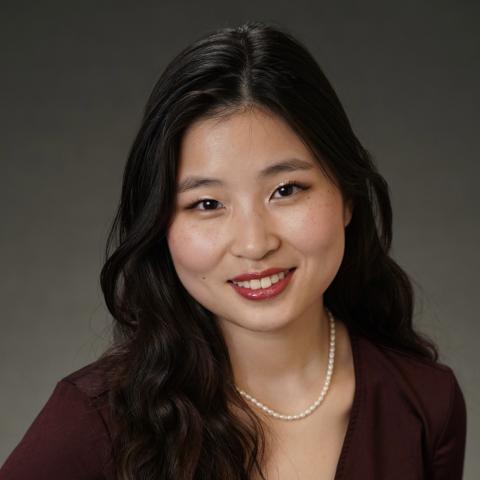
Trinity Fan
Trinity Fan was generously supported by the Helen Graham Artist Award.
Trinity Fan, 24, is a pianist and composer based in Ann Arbor, Michigan. She has been a top prizewinner of several competitions including YoungArts, Music Teachers National Association, Camerata Artists International Competition, and more. Recently, Trinity performed Gershwin’s Concerto in F with the Dexter Community Orchestra where she improvised throughout the work, was awarded Honorable Mention in the 2026 Musicians Club of Women Instrumental Competition, First Prize in the 2025 Rosamund P. Haeberle Piano Competition, as well as Honorable Mention in the 2025 Michigan MTNA Young Artist Piano Competition.
As a composer, Trinity received Second Prize in the 2024 MTNA National Composition Competition for her piece, “Reminiscence.” She previously studied with Shuyu Lin, Corey Chang, and Wong Chun Wai. Aside from performing, Trinity has a love for teaching. She is a former faculty member of IU's Young Pianists Program and is now a Graduate Student Instructor at the University of Michigan School of Music, Theatre & Dance and teaches at SMTD's Piano Pedagogy Laboratory Program.
Trinity completed her bachelor’s and master’s in Indiana University and the University of Michigan. She has attended festivals including the Rebecca Penneys Piano Festival, the Amalfi Coast Festival, Tanglewood, and the Edward Auer Piano Winter and Summer Workshops, where she also assisted as a coordinator for 3 years. Her teachers include Christopher Harding, Edward Auer, and Tomoko Harada. Trinity is currently pursuing her doctorate studies at the University of Michigan in Piano Pedagogy and Performance under Christopher Harding and jazz improvisation with Andy Milne.
Participant
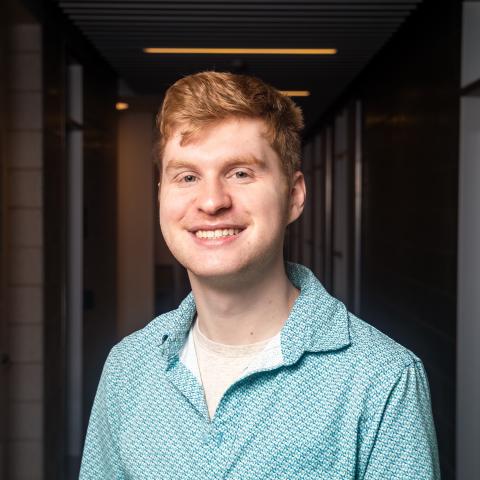
Alex Glass
Alex Glass was generously supported by the Banff Centre Artist Award.
ALEX GLASS (b. 2000) is a New York City-based composer, pianist, improviser, and educator who creates thoughtful, emotionally powerful music while exploring and dissolving boundaries between musical practices. Alex likes to construct intricate and immersive sonic worlds out of small musical seeds grown in novel environments, exploring themes of memory, perception, anxiety, and wonder; his works have been performed by prestigious ensembles such as the Mannes Orchestra, SPLICE Ensemble, and the Valencia International Contemporary Ensemble. As an active pianist and interpreter of new music, Alex can frequently be seen premiering his own and colleagues’ works throughout the city. Equally well-versed in improvisation-based music, Alex recently released his debut album, Everything Falling Together, featuring all original compositions performed with a jazz combo. Alex is also a passionate educator, holding private piano and guitar studios in Tribeca, Manhattan and Bath Beach, Brooklyn.
Alex earned his Bachelor’s degree in composition from Boyer College at Temple University, and his Master’s degree in composition at the Mannes School of Music, where he studied with Timo Andres. [You can learn more about Alex on his website, alexglassmusic.com.]
Participant
Staff Credits
Josephine Ridge
Executive Director, Arts
Michael Falk
Director, Music
Ivy Pan
Program Manager, Music
Andew Smith
Production Manager
Marissa Gel
Assistant Production Manager
Cal Smith-Young
Production Coordinator
Henry Ng
Audio and Music Technician
Olivia Kariunas
Program Delivery Specialist