English
Body
Snowy mountain landscape

By Michael Kennedy

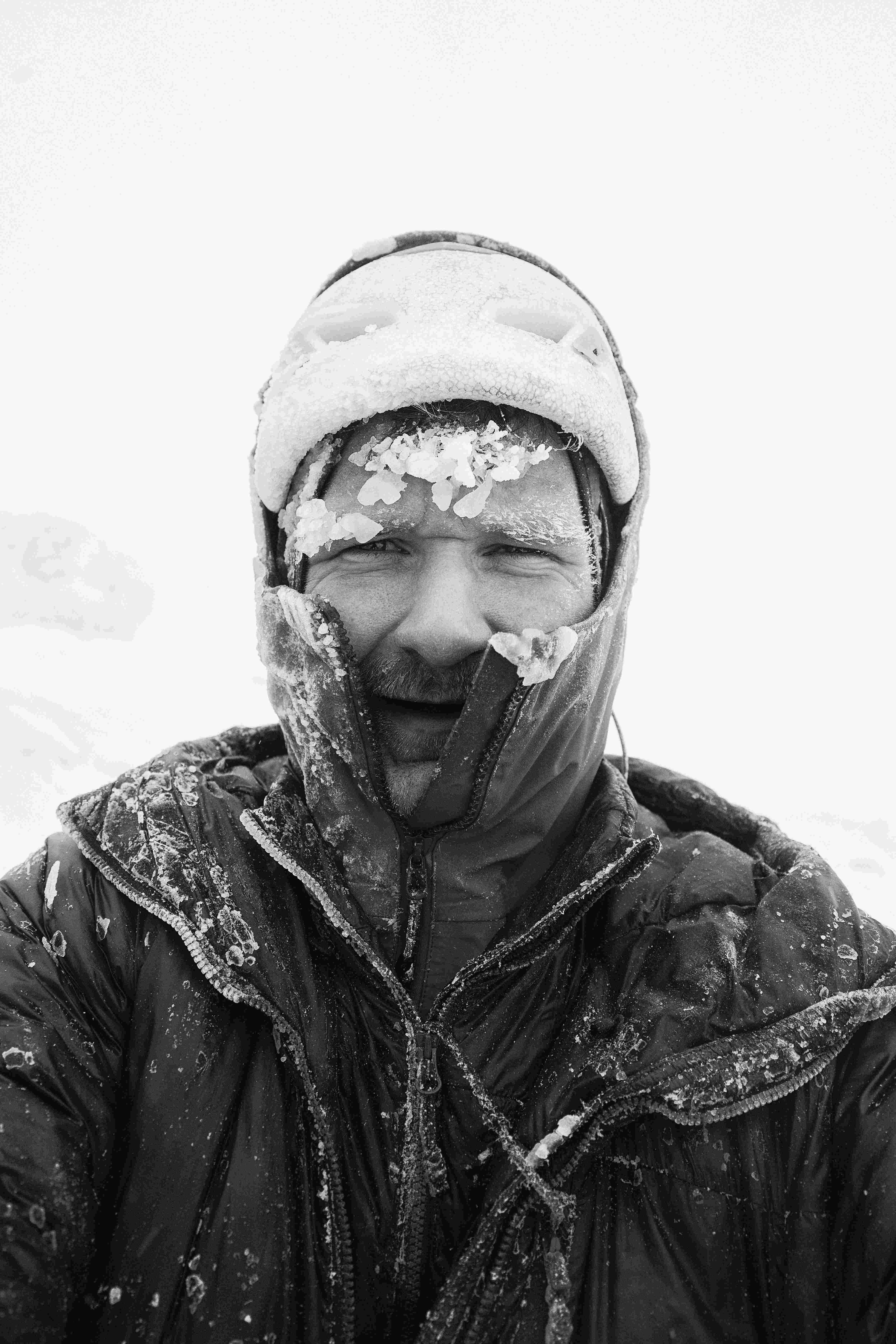
I was broken when I came to Banff Centre for the Mountain and Wilderness Writing program (now called Mountain Writers Intensive) in October 2019. Our son Hayden had died by suicide two years before. I wanted to write a memoir but had no idea of how to approach such a daunting task. All my previous writing had been prosaic, a workmanlike procession of news, editorials, book reviews, and features produced during my twenty-four years as editor of Climbing Magazine. How could I turn a few vague ideas into a book that made sense of the twenty-seven years my wife Julie and I had shared with Hayden, and the devastation his death had wrought?

Those three weeks in Banff were a godsend. Under the able and sympathetic guidance of faculty members Marni Jackson, Tony Whittome, and Harley Rustad, I was able to put together the first few chapters and develop a rough plan for the rest of the book. The other writers in the workshop were extraordinarily diligent and thoughtful in their close reading of the work we shared with each other.

At the end of our three weeks together it seemed a shame to say goodbye. Several of us have continued meeting online in the years since; this group’s feedback and support have been essential to my ability to tackle the most challenging writing I’ve ever attempted. More importantly, we’ve developed the kind of lifelong friendships that only come from sharing our most profound experiences, our fears, and frustrations, and our infrequent moments of transcendence.

It would be easy to attribute the synergy I experienced in 2019 to the personal chemistry among this group of people. But there seems to be something else at work, a particular mix of place, spirit, and intention unique to Banff Centre. That hint of magic while walking across campus at midnight as falling snow glimmers in lamplight, engaging in an unexpected breakfast conversation at Vistas, catching a raven in flight over the Bow River valley from the Tunnel Mountain trail. There is an “aha” moment sparked by a fellow writer’s question that clarifies the path you’ve been missing, while tapping into the vitality of the Banff Centre Mountain Film and Book Festival.

And you somehow sense the spirit of the Indigenous peoples who have inhabited this land for millennia, and the collective energy of the artists, filmmakers, athletes, thinkers, and writers who have passed through Banff Centre.

My hope is that this year’s participants in the Mountain Writers Intensive find a similar sense of purpose and community. That they and future writers continue a long tradition of insightful and unique storytelling. I know I’ll return year after year to reconnect and to center my creative practice. To learn and to grow. To tap into the magic.
 

Find out more about the Mountain Writers Intensive 2026 program at Banff Centre for Arts and Creativity.

Page Summary
Mountain writing participant Michael Kennedy had a powerful and transformational experience, finding purpose and community after unfathomable loss when he atten
Feature Image
Michael Kennedy_10-29-2019 during the Mountain & Wilderness Writing program.jpg
Contact Text Block

Media Contact

Interested in reporting on this or any other Banff Centre story? Members of the media can reach out to communications@banffcentre.ca for more information.

Hide Sidebar
Off
English
Body
snowy mountain with mist in foreground

Dr. Alison Criscitiello
The Banff Centre Mountain Film and Book Festival celebrates Dr. Alison Criscitiello as the recipient of the 2025 Summit of Excellence Award—which, since 1987, has recognized outstanding individuals who have made a significant contribution to mountain life in Canada.


Dr. Alison Criscitiello is a world-renowned ice core scientist, glaciologist, advocate for gender equity, mother, and high-altitude mountaineer. She is an Assistant Professor and the Director of the Canadian Ice Core Lab at University of Alberta, and co-founder of Girls* on Ice Canada. 


As a scientist, her work has taken her to ice caps around the world including Antarctica, Greenland, and the Canadian High Arctic. Criscitiello explores the history of climate and sea ice in polar and high-alpine regions by tracking environmental contaminant histories using ice core chemistry. Criscitiello is at the forefront of data capture and documentation of ice loss in these volatile zones. 


Criscitiello’s expedition to collect ice core samples from the summit of Mount Logan was groundbreaking (and back-breaking) work. While polar ice coring science has been around for half a century, no one had conducted such an extensive collection from such a high altitude.  


Criscitiello is committed to making science more accessible to young women and as a founder of the Girls* on Ice Canada program, Criscitiello hopes to merge science, art, and adventure to inspire leadership and confidence in the next generation of leaders. Her work has motivated a community of young women to pursue their interests in science and dive into their passions in the outdoors.

She was elected into Canadian Geographic Society’s College of Fellows and has been recognized as a Fellow by The Explorer’s Club. She was awarded a Queen Elizabeth II’s Platinum Jubilee Medal and is the recipient of three American Alpine Club (AAC) climbing awards, The John Lauchlan Award, the Mugs Stump, and the Alpine Climbing Award.
 

Sponsored by

Norseman Town of Cochrane

“Her work has motivated a community of young women to pursue their interests in science and dive into their passions in the outdoors.” 

Page Summary
The Banff Centre Mountain Film and Book Festival celebrates Dr. Alison Criscitiello as the recipient of the 2025 Summit of Excellence Award.
Feature Image
Sleeping Buffalo Guardian Mountain
Contact Text Block

Media Contact

Interested in reporting on this or any other Banff Centre story? Members of the media can reach out to communications@banffcentre.ca for more information.

Hide Sidebar
Off
English
Body
Bernadette McDonald with a film reel in 1991. Courtesy of the Paul D. Fleck Library and Archives.

By Debra Hornsby, World Tour Road Warrior and Festival Volunteer Coordinator
 

On any given night somewhere in the world, 

the Banff Centre Mountain Film and Book Festival theme music booms from speakers in a darkened theatre. Audience members lean forward in their seats, eager for an evening of adventure films. Each year, the Festival’s World Tour presents screenings in over 500 locations across 45 countries, reaching annual audiences of over half a million people. But this juggernaut of mountain culture began—as so many great things do— small, with a handful of staff, and a single screening in Banff in 1976. The idea of taking the best films from the Banff competition on the road was launched five years later, in 1981.

Patsy Murphy was the brave woman tasked with delivering that first tour to six Canadian cities, in partnership with the Alpine Club of Canada. “It occurred to me that without the films, there would be no show, so I somehow managed to talk the airline into letting me bring six giants—and very heavy—16 mm film canisters as carry-on luggage!” Those early screenings were no-frills affairs, held in school gyms and community centres. “There was only one copy of each film, no back-up,” Patsy remembers.“My biggest nightmare came true in Toronto with an old projector set in the center of a gymnasium. In the middle of the event, a film snapped. On went the overhead lights and I proceeded to splice the film together with scotch tape, in full view of everyone. Luckily the mend held and the show went on.”

It was Bernadette McDonald who firmly established the Banff Festival on the world stage. “There was an enormous amount of energy expended in gathering the films for the competition—a lot of work for what was then a two-and-a-half-day festival,” she notes. “So, the tour was a way to extend the impact of those films beyond Banff.”

For McDonald, who was Festival Director from 1988 to 2006, the tour light bulb moment came during a sponsorship course. “The instructor used our festival as a case study, and he pointed out that it was gold,” she says. “It provides value for filmmakers, value for audiences, value for outdoor companies who want to reach those audiences, and value for the local hosts in each city. Win-win-win.

Under Bernadette’s leadership, the Festival signed partnerships with industry leaders such as Patagonia, Eagle Creek, and National Geographic. And the Festival extended its reach—establishing screenings across the United States, and then internationally.“I think one of our first international shows was in Cape Town, South Africa, in conjunction with a UIAA (International Climbing and Mountaineering Federation) conference. Prague was another early location—and Tokyo, where we did a week of screenings at the Canadian embassy. And the Tour just continued to expand, year over year.”

Technology has changed—16 mm films gave way to VHS, then DVDs, and today the films are delivered on hard drives and through digital downloads. But Bernadette’s win-win-win formula continues to work its magic. 

Banff Centre Mountain Film and Book Festival films are translated and subtitled into 17 non- English languages for viewers on every continent. And in North America, 76 per cent of the 450 tour screenings benefit a community cause—from outdoor programs for disadvantaged youth, to mountain rescue organizations, to land conservancies. And perhaps most importantly, as Bernadette points out, “The heart and soul that adventure filmmakers pour into their projects reaches audiences around the world.”

Page Summary
Find out more about the Banff Centre Mountain Film Festival World Tour—which now reaches approximately 45 countries around the world—and where and how it all be
Feature Image
World Tour_Bernadette_CA1991-929006 (1).jpg
Contact Text Block

Media Contact

Interested in reporting on this or any other Banff Centre story? Members of the media can reach out to communications@banffcentre.ca for more information.

Hide Sidebar
Off
English
Body
snowy mountain with mist in foreground

When I first visited the Festival in 1997 I could never have predicted the course my life would take. I had just finished a three-month intensive mountaineering course and had heard that Lynn Hill would be attending the Festival to sit on the film jury. It was a dream come true. The story of her free climb of The Nose on El Cap was the inspiration that would lead me to a life immersed in mountains. Like many of our Festival-goers, my first visit was transformational and I knew I was hooked for life.

When I was hired onto the Festival team in 2007, I found my dream job-and now 18 years later as Director of Mountain Culture at Banff Centre for Arts and Creativity, it's up to me to ensure that the energy and inspiration are never lost so
that the legacy lives on. 

After 50 years, the Festival continues to be one of the most significant events of the year for the mountaineering community in North America. Since its inception in 1976, the Festival has hosted hundreds of the world’s top adventurers and climbers. Legends like Sir Edmund Hillary, Dr. Tom Hornbein, Fred Beckey, Apa Sherpa, Catherine Destivelle, Alison Hargreaves, and Junko Tabei have all graced the Banff stage. Prominent authors like Wade Davis, Peter Matthiessen, Kate Harris, John Vaillant, Terry Tempest Williams, and many others have shared their stories in our Book Festival—whomever thinks that the Festival is only about films likely hasn’t ever attended our in-person Festival in Banff. The printed word is alive and well and book events prove to be one of the most memorable aspects of the Festival. 

We are the storytelling experts and, I can tell you, that tradition continues for the first week of November every year. There have been stories shared on the big screen: of being first (Free Climbing the Nose 1997, Everest Unmasked – the First Ascent Without Oxygen 1980), being the last (The Last Honey Hunter 2017, The Last Observers 2024), the tragic loss of partners (Death on Nanga Parbat 2007, Learning to Drown 2021), audacious rescues (Nordwand 2009, The Rescue 2021), and close calls (Escape from Tibet 1995, Berserk in the Antarctic 2001, Solo 2009). 

We have met people who have: survived avalanches (Cold, 2011), got there the fastest (Ueli Steck: The Swiss Machine 2010, A Fine Line 2013, K2: Chasing Shadows 2025), climbed the lightest (The Wall of Shadows 2020, A Gift From Kei Taniguchi 2024), paddled blind (The Weight of Water, 2018) and those who had to cut the rope (Touching the Void 2003). We have met characters who have committed their lives to: saving mountain landscapes (Shepherdess of the Glaciers 2016, Wild Life 2023), sharing Indigenous knowledge (Keepers of the Land, 2023, KONELĪNE: Our Land Beautiful 2016), and those who have reimagined what it means to be human (Becoming Who I Was, 2017). 

We have discovered animal realms (He Dances for His Cormorants 1994, Mountain Gorilla: A Shattered Kingdom 1996, Nuisance Bear 2022), met hermits (Charles, Edouard ou le Temps Suspendu 2005, Into the Wild 2007), and seen creativity at its best on screen (Lawren Harris – Journey Toward the Light 1988, All.I.Can 2011, Petit Bus Rouge 2014). We have screened 2419 films in 49 years, that’s 82,681 minutes! This year we will add 87 more films and 2,940 minutes to the total. 

We are the leaders in Mountain Culture and our awards remain the most prestigious and sought after on the planet. A Grand Prize in Banff is a life goal realized for any filmmaker or author. Many of the award-winning films that premiere in Banff are scooped up by other festivals who know that a Banff winner is a top-notch crowd-pleaser. Becoming a filmmaker with our official selection laurels under your belt means others will pay attention, and maybe one day you’ll win an Oscar just like Festival alumnus Jimmy Chin did for Free Solo in 2018. 

When you attend the Festival as a fan, filmmaker, author, athlete, or artist, a door opens. This door leads to amazing things. It leads to realizing self-potential and takes you on a journey which shows you just how resilient you can be. The wonderment and inspiration of storytelling is in our framework as humans, and we all want to be part of it. Go ahead, step through that door and see where life takes you. I guarantee you’ll never look back.

By Joanna Croston, Director of Mountain Culture at Banff Centre for Arts and Creativity

Page Summary
We are celebrating our 50th anniversary in 2025! Find out more about the fifty-year legacy of the Festival in Banff.
Feature Image
Sleeping Buffalo Guardian Mountain
Contact Text Block

Media Contact

Interested in reporting on this or any other Banff Centre story? Members of the media can reach out to communications@banffcentre.ca for more information.

Hide Sidebar
Off
English
Body
From the film Loving Karma
Staff Picks! Here's a list of 10 events that Festival staff are most looking forward to:
 

1. Natasha: Iron Winter. Such a visually stunning and immersive film, I can't wait to see it on the big screen. 
(Nov. 1, Margaret Greenham Theatre)

2. Megan: The Fire and Ice Symposium – we have such a remarkable lineup of keynote speakers and panelists all together for these two unique days at this year’s Festival including James Balog, Børge Ousland, and Vincent Colliard in the Jenny Belzberg Theatre. 
(Nov. 4-5, various venues)

3. Nicky: Børge Ousland I remember seeing him on stage in Banff years ago, and he was a terrific speaker – I look forward to hearing more tales of icecap escapades. 
(Børge Ousland, Vincent Colliard, and Films on Nov. 4, Jenny Belzberg Theatre)

4. Karolina: Yosemite Women. I can't wait to see inspiring, badass women (including Lynn Hill of course!) talking about their ascents, it goes boys! 
(Yosemite Women, Book Awards, and Films, Nov. 6, Jenny Belzberg Theatre)

5. Cédric: BanffPitch! Seeing projects in their development stage is so inspiring, not to mention hearing the passion in the filmmaker's voices. 
(Nov. 8, Max Bell Auditorium, FREE)

6. Joanna: Junko Tabei 50th Anniversary - Book Program. It's been fifty years since Junko became the first woman to summit Everest and not only that, but she went to Nepal with an all-women's Japanese team.  Come and celebrate Junko! 
(Nov. 5, Whyte Museum/Sold out)

7. Sarah: Jo's book talk for 'Mountaineering Women'! Amazing to highlight the incredible women who are setting the stage for us in the outdoor industry! 
(Nov. 6, Max Bell Auditorium)

8. Lauren: The film The Track. This is going to be SO great to see on the big screen! Such a great story about chasing an improbably Olympic dream in Bosnia. 
(Evening Mixed Films, Nov. 7, Margaret Greenham Theatre)

9. Deb: I have never forgotten Tashi, the lost and angry little girl seeking love in Tashi and The Monk, a Festival favorite back in 2014. In Loving Karma, we meet Tashi again 12 years later. I can't wait for audiences to see this touching film about the power of love. 
(Nov. 7, Max Bell Auditorium; Nov. 8, artsPlace)

10.  Mark: Iron Winter, ditto to Natasha. And the Bow Valley Showcase, can’t wait to share the love of local films and filmmakers! 
(Nov. 9, Max Bell Auditorium)

Page Summary
Find out what events Festival staff are looking forward to!
Feature Image
LovingKarma_Banner2_1920x1080 - web.jpg
Contact Text Block

Media Contact

Interested in reporting on this or any other Banff Centre story? Members of the media can reach out to communications@banffcentre.ca for more information.

Hide Sidebar
Off
English
Body
From Left to Right – Chamshen Kangri, Saser Kangri I and Plateau Peak

 Laknak Kangri (Golden Eagle Peak) has a unique aerial view.

Before August 14th, 2024, no one had ever seen the entire Karakoram range from the top of Laknak Kangri. Until Divyesh Muni, experienced mountaineer and Indian Tour Host for the Banff Mountain Film Festival, led a team to summit peak 6496 in the Karakoram.

The Karakoram is not for the faint of heart. It is dry, rugged, and home to massive glaciers. The expedition started on August 1. They reached Base Camp August 6. After hours of searching, they found a location for Camp 1 at 5670m, and arrived on August 10. Initially, they could only see ice walls on the route to the summit. Eventually, they traversed up to a crevasse, following it until they could cross. On August 13, they moved to Summit Camp at 6100m. The next morning, despite bad weather, the team made the steep final summit climb. At 9am on August 14, they summited peak 6496.

His first attempt was in 2023, but poor weather and health problems prevented his team from summiting. Not one to give up, Divyesh tried again. He continued training and built a new team.

Divyesh notes that the criteria for his team is simple; “friendship and compatibility,” and skill. Muni also encourages a less-skilled climber to join each expedition to learn. This expedition included Sudeep Barve, Yogesh Umbre, Phuphu Dorji, Sangbu Bhutia, Phurten Bhutia, three Sherpas, a cook, assistants, low-altitude porters, and, of course, Divyesh.

Everyone agreed it should be named Laknak Kangri (Golden Eagle Peak) as tribute to the unique aerial view. After prayers and photos, the team began their long descent.

Divyesh calls the feeling “indescribable.”

With 26 other first ascents under his belt, we’re sure Divyesh won’t be stopping after this one, and we look forward to seeing what he does next.

Author: Akcinya Kootchin, Banff Centre for Arts and Creativity

Located in the Canadian Rocky Mountains, the Banff Centre Mountain Film and Book Festival is a globally recognized event and tour celebrating the beauty, adventure, and culture of mountains globally. Join us at Banff Centre for Arts and Creativity from November 1 – 9, 2025 for the 50th Anniversary of the Festival in Banff, Alberta! The nine-day festival showcases live events with adventurers, authors, photographers, and filmmakers sharing their inspiring stories.

Online films are also available to watch throughout the year on Banff on Demand.  
To find out more about the Festival, World Tour, and related programs, please visit banffcentre.ca/banffmountainfestival
 

Page Summary
Before August 14th, 2024, no one had ever seen the entire Karakoram range from the top of Laknak Kangri ... until Divyesh Muni.
Feature Image
06 Summit View.JPG
Contact Text Block

Media Contact

Interested in reporting on this or any other Banff Centre story? Members of the media can reach out to communications@banffcentre.ca for more information.

Hide Sidebar
Off
English
Body
A picture of John Vaillant next to his book Fire Weather, which talks about wildfires in Canada.

A message from John Vaillant -

When the petro-city of Fort McMurray was overrun by fire on an unseasonably hot May afternoon in 2016, it was clear from the fire’s intensity, and its subsequent behavior, that we were turning a corner in our relationship to fire - not just regionally, but climatically and planetarily. Fire Weather is an attempt to explore the causes and effects of this phenomenon, which I term 21st Century Fire. 
I think there is a sweet spot between page-turning action, deeply researched information and insight, and personal, relatable story that, when presented in the right ratio, can carry citizen readers way out of their ordinary comfort zones, and into an elevated state of awareness and understanding. This is the goal.

1


If a tree burns in the forest and nobody sees it . . .


In Canada, this is more than a philosophical question. Canada contains 10 percent of the world’s forests, vast tracts of which are uninhabited. But “vast” is an ineffective descriptor when it comes to Canada, its forests, or its fires. One way to grasp the magnitude of this country is to get in a car in Great Falls, Montana, and head up I-15 to Sweetgrass, on the Canadian border. Once you’ve crossed into Coutts, Alberta, reset your odometer and point your car north. Then, settle into your seat for a couple of days. With the Rocky Mountains on your immediate left, this route takes you up the western edge of the Prairies, through Lethbridge, Calgary, and Red Deer— wheat and cattle country. Once past the northern metropolis of Edmonton, you will find yourself increasingly alone on the road, surrounded by broad expanses of hardscrabble subarctic prairie— fields frozen solid or half drowned and barely fit for cattle feed. On the main road, now no wider than a residential street, hamlets with one blinking light and a gas station slide by and not another for fifty miles. To the east and west, gravel range roads run out to the vanishing point, and man- made structures appear more and more as intermittent novelties. Here, a schoolhouse- sized Ukrainian church with its tin- sheathed onion dome stands alone against a windswept loneliness so profound it suggests the Russian steppe. There, a barn collapses asymmetrically beneath the weight of a hundred heavy years, fully half of them spent clenched in the fist of winter, the people long gone. Farther on, a ten-acre lake so startlingly blue that mere reflection, even of Alberta’s sky, seems insufficient to explain it. Somewhere along the way, you will cross an unmarked divide where deer give way to moose, crows give way to ravens, and coyotes give way to wolves. By the time you get to North Star, the wide-open spaces for which Alberta is famous will be filled in by low, mixed forest and bogland that bears a strong resemblance to Siberia. By the time you stop for coffee in a lonely place called Indian Cabins, it will be tomorrow and your odometer will be approaching one thousand miles, but you will still be in Alberta.


Up here, in the landlocked subarctic, things seem to occur in outsized dimensions: lakes can be the size of inland seas and the trout inhabiting them can weigh a hundred pounds; large wild animals, including the continent’s biggest bison, outnumber people. In Wood Buffalo National Park, the second-largest national park in the world, is the world’s largest known beaver dam. Spotted in 2007 with the aid of a satellite, it is more than twice as long as the Hoover Dam, and it appears to be growing. In 2010, an adventurous man from New Jersey named Rob Mark set out to visit it. He was allegedly the first person to do so, and it was hard going. “The foliage is so thick,” Mark told the CBC, “you can’t see very far . . . then it turns into muskeg, which is incredibly difficult to walk on. And then it goes out to complete bog swamp.” It explains why so few outsiders frequent this place in the warmer months, and why winter is the preferred season for cross-country travel. “The mosquitoes,” added Mark, “are absolutely horrific.”


One exception to the general gigantism can be found in the trees, which seldom exceed sixty feet in height or a hundred years in age. These woods, a shifting mix of pine, spruce, aspen, poplar, and birch, are known collectively as the boreal forest,* and whatever they may lack in individual size, they compensate for in sheer numbers. Girdling the Northern Hemisphere in a circumpolar band, the boreal forest is the largest terrestrial ecosystem, comprising almost a third of the planet’s total forest area (more than 6 million square miles—larger than all fifty U.S. states). Fully a third of Canada is covered by boreal forest, including half of Alberta. Continuing west, over the Rocky Mountains, through British Columbia, the Yukon, Alaska, and across the Bering Strait into Russia (where it is known as the taiga), the boreal forest stretches all the way to Scandinavia and then, undeterred by the Atlantic Ocean, makes landfall on Iceland before picking up again in Newfoundland and continuing westward to complete the circle, a green wreath crowning the globe.


As densely wooded as the boreal might appear from the roadside, it is, within, something far more amphibious, containing more sources of fresh water than any other biome. In this sense, the circumboreal forest resembles a kind of hemispheric sponge that happens to be covered in trees, their billions of miles of roots weaving the continents together in a subterranean warp and weft. While not as openly fluid as Florida’s Everglades, the boreal’s countless lakes, ponds, bogs, rivers, and creeks serve a similar function of gathering, storing, filtering, and flushing fresh water. Billions of birds, representing hundreds of species, live in and migrate through this ecosystem.


One reason the trees never get very big or very old is because, in spite of all that water, they burn down on a regular basis. They’re designed to. In this way, the circumboreal is truly a phoenix among ecosystems: literally reborn in fire, it must incinerate in order to regenerate, and it does so, in its random patchwork fashion, every fifty to a hundred years. This colossal biome stores as much, if not more, carbon than all tropical forests combined and, when it burns, it goes off like a carbon bomb. In North America, the epicenter for these stratospheric explosions is northern Alberta. Because of this, every town up here, big or small, faces the same dilemma: where the houses end, the forest begins. There are bears, wolves, moose, and even bison in there, but the most dangerous thing hiding in those woods is fire. Under the right conditions, a big boreal fire can come on like the end of the world, roaring and unstoppable. These are fires that can burn a thousand square miles of forest along with everything in it and still be out of control.


Virtually unknown and, at the time, unseen by all but a handful of people, is the Chinchaga Fire of 1950, the largest fire ever recorded in North America. Igniting on the border of British Columbia and Alberta in June of that year, it burned eastward across northern Alberta for more than four months, impacting approximately 4 million acres, or 6,400 square miles, of forest (roughly, the combined area of Connecticut and Rhode Island, or three times the size of Prince Edward Island). The fire generated a smoke plume so large it came to be known as the Great Smoke Pall of 1950. Rising forty thousand feet into the stratosphere, the plume’s enormous umbra lowered average temperatures by several degrees, caused birds to roost at midday, and created weird visual effects as it circled the Northern Hemisphere, including widespread reports of lavender suns and blue moons. Prior to the Chinchaga Fire, the last time such effects had been reported on this scale was following the eruption of Krakatoa in 1883. Carl Sagan was sufficiently impressed by the effects of the Chinchaga Fire to wonder if they might resemble those of a nuclear winter.


Every year, the National Oceanic and Atmospheric Administration (NOAA), in cooperation with fire scientists from Canada and Mexico, issues a document called the North American Seasonal Fire Assessment and Outlook, which attempts to predict the likelihood of wildfires across the continent. The Outlook includes maps for each month of fire season, and they are color-coded, with red indicating a likelihood of increased fire activity and green indicating a decrease. Like 2015 before them, the monthly maps for 2016 showed a lot more red than green, and the map for May showed more red than all the others: in addition to large swaths of Mexico, the American Midwest, and all of Hawai’i, red covered much of southern Canada— from the Great Lakes all the way to the Rocky Mountains. It was an enormous area and included most of Alberta’s active petroleum fields. In the middle of that hot zone, in the middle of the forest, sat Fort McMurray.


Fort McMurray is an anomaly in North America. Located six hundred miles north of the U.S. border and six hundred miles south of the Arctic Circle, the city is an island of industry in an ocean of trees. Without the lure of petroleum, this part of Alberta would resemble Siberia in even more ways than it already does: sparsely populated; its rivers spun like compass needles toward the Arctic Ocean; its trees low, short-lived, and prone to fire. Here, half a dozen permanent settlements dot a region the size of Kentucky, and only one has a population over 800: in 2016, Fort McMurray and its satellite communities were home to an international population of nearly 90,000 people living in 25,000 houses and buildings ranging from trailer homes and condominiums to McMansions and high-rise concrete apartments. The city’s “urban service area”— the area covered by garbage collection and firefighting services— covers sixty square miles of convoluted terrain laced with creeks and ravines that are further fragmented by two major rivers and two tributaries. Together, they surround and entwine the city like the writhing arms of an octopus.


Scattered across the surrounding landscape in semipermanent “man camps” was an additional shadow population of roughly forty thousand workers whose numbers ebb and flow with the price of crude oil, the pace of development, and routine maintenance cycles at the processing plants. As one longtime resident put it, “We’re just a colony of oil companies.” Canada is the world’s fourth-largest oil producer and the third-largest exporter. Nearly half of all American oil imports— around 4 million barrels per day, come from there— the equivalent of one ultra large crude carrier ship every twenty-four hours. Of this vast quantity, almost 90 percent originates in Fort McMurray.


Despite being virtually unknown outside of Canada and the petroleum industry, Fort McMurray has become, in the past two decades, the fourth-largest city in the North American subarctic after Edmonton, Anchorage, and Fairbanks. In terms of overtime logged and dollars earned, it is, without a doubt, the hardest-working, highest-paid municipality on the continent. In 2016, two years past a decade-long boom that ended with a sudden drop in global crude oil prices, the median household income was still nearly $200,000 a year. Fort McMurray has earned several nicknames over the years, and one of them is Fort McMoney.


May 3, 2016, began differently for everyone, but in Fort McMurray, it ended the same. For Shandra Linder, it began with a rite of spring. Linder was a labor relations adviser who worked for Syncrude (a portmanteau of “synthetic crude oil”), a mainstay of the local economy. Shandra’s husband, Corey, an engineer, was employed there, too, and so were many of their friends. Both Linders worked out of the head office at the Mildred Lake complex, a half hour’s drive north of town. By 2016, Shandra Linder had called “Fort Mac” home for nearly twenty years; blond, with a pixie cut, Linder is fit and warm and does not suffer fools. It makes sense once you get to know her and what she does, but to an outsider it might be surprising to see someone so polished— and female— in such a remote, industry-oriented, testosterone-heavy place. At “Site” (the catch-all term for any mine or other petroleum-related workplace around Fort McMurray), the ratio of men to women runs about twenty-five to one. For work, Linder dressed accordingly: minimal makeup, high collars, dark pants, no heels— clothes suitable for climbing in and out of trucks and SUVs, for working in a world of working men. Linder exudes a quiet confidence, in part because working full-time for Syncrude, or its larger counterpart, Suncor, confers a blue-chip status on its employees. Working for these companies is the boreal equivalent to working for Exxon or Shell, and the distinction permeates like a pheromone. As one insider put it, “I am Syncrude and you are not.” Tradesmen and machine operators wear their company badges like team colors— even to the bars, where, during the last boom, they signaled to available women like so much plumage. Comparable to a stockbroker’s platinum card, worn externally, a company badge communicates volumes at a glance: six-figure salary, five-figure truck, four-figure party budget, fungible skills. Meanwhile, the company, also known as “the Owner,” or “Mother Syncrude”— asks a lot in return: just like Wall Street or Silicon Valley, working late and weekends is simply part of the job. But that’s where the money is: in Fort McMurray, the best time is overtime.


Shandra Linder had already seen the smoke plume southwest of town, because everyone had seen it. It had been there for days, morphing on the horizon, a windswept cauliflower of billowing grays and browns that appeared to have sprouted, full blown, from the forest on Sunday afternoon. It had been growing since then, but it was still miles away, and it wasn’t the only one. Over the weekend, the Linders had hosted friends who had evacuated due to another fire burning near the new Stonecreek development north of downtown. It was almost a lark: on Sunday, May 1, they’d had cocktails on their back deck in Timberlea, one of many hilltop neighborhoods to the north and west of downtown. There, drinks in hand, putting green and pocket fountain at their feet, they took photos of the big plume developing across the river the same way one would a sunset or a rainbow. They ate chicken and rice, and got a convivial buzz on—life was good in Fort McMurray. Their friends went home the next day.


Because Forestry was on it: boots were on the ground, water bombers were in the air. As far as the Linders and their guests were concerned, whatever was out there was being handled. After all, that is what people do in Fort McMurray: they handle things. Not many regions self- select as rigorously as northern Alberta does, and Fort McMurray selects for workers—tough, adventurous team players, highly motivated to do what it takes and prosper. That includes wild-fire fighters, and Alberta Forestry’s wildfire crews—with a territory ranging from tallgrass prairie and parkland to the Rocky Mountains and the boreal forest—are considered among the best in the world. In private, some members consider themselves the best. Certainly, the beginning of May was a little early for fires—there were still car-sized blocks of winter ice on the riverbanks, and some local lakes had yet to thaw—but otherwise, this was nothing new. Fires cloud the horizon every spring and summer; up here, smoke is simply a feature of the boreal landscape. As Shandra and Corey Linder said, practically in chorus, “It happens every year.”


Which was true, until it wasn’t.


In the forest, out of sight, things were changing. Winter snowfall had been far below average for two years running and, though it was still early spring in the north, leaves and pinecones crackled underfoot as if it were late summer. Given this, the unseasonable heat, and the fact that five separate wildfires ignited around the city that weekend, it is hard to overstate how unconcerned was Fort McMurray’s citizenry. But if you were up at dawn on May 3, as Shandra Linder was, and you had seen the sky, so fresh and clear and full of summer promise, as she had, you might understand why. The brilliance of that morning was so exceptional, even for northern Alberta, that after her morning routine of a dog walk, emails with coffee and a cigarette, and a shower, Linder did something she hadn’t done in a long time: she pulled out her favorite navy-blue suit with the skirt, picked some medium heels to go with it, and left her socks in the drawer. Thus attired, she headed off to work in Syncrude’s head office at Mildred Lake. In the garage, there were a few vehicles to choose from; in keeping with her outfit and her mood, Linder picked the car she calls “the little one”—a black Porsche that hadn’t seen daylight in six months. Winters are long and dark in Fort McMurray, but this one was over, spring was here, and Linder felt as beautiful and hopeful as the day.


She had lots of company; over the past few weeks, her neighbors had been emerging, too, unfurling with the spring flowers that had arrived weeks early that year. Coats and boots worn like a second skin since October were being packed away, and yards were being tidied after half a year of neglect. Garages, where a lot of Fort McMurray actively socializes among tool benches, beer fridges, ATVs, and various works in progress, were opening to the air, sun, and visitors. People were smiling to themselves at the bus stop, faces turned skyward like sunflowers, or Russians, as their bodies remembered the foreign sensation of warm sun on bare skin.


* “Boreal,” which means “northern,” is derived from Boreas, the Greek god of the north wind.

Excerpted from Fire Weather by John Vaillant. Copyright © 2023 John Vaillant. Published by Alfred A. Knopf Canada, a division of Penguin Random House Canada Limited. Reproduced by arrangement with the Publisher. All rights reserved. 

John Vaillant is an author and freelance writer whose work has appeared in The New Yorker, The Atlantic, National Geographic, and the Guardian, among others. His first book, The Golden Spruce (Knopf, 2005), was a bestseller and won several awards, including the Governor General's and Rogers Trust awards for non-fiction (Canada). His second nonfiction book, The Tiger (Knopf, 2010), won the B.C. Achievement Award for Canadian Non-Fiction, was a bestseller and has been published in 16 languages. Film rights were optioned by Brad Pitt’s film company, Plan B. In 2014 Vaillant won the Windham-Campbell Prize, a global award for non-fiction. In 2015, he published his first work of fiction, The Jaguar's Children (Houghton Mifflin), which was long-listed for the Dublin IMPAC and Kirkus Fiction Prizes, and was a finalist for the Writers’ Trust Fiction Prize (Canada). Fire Weather (Knopf, 2023) was nominated for a Pulitzer Prize and the National Book Award, and won the UK's Baillie Gifford Prize and Canada's Shaughnessy Cohen Prize. A #1 bestseller in Canada, it was named one of the ten best books of 2023 by The New York Times, among many other prominent publications in Europe and North America. Feature film rights have been optioned by Vendôme Pictures, which won an Academy Award for CODA in 2022.

Located in the Canadian Rocky Mountains, the Banff Centre Mountain Film and Book Festival is a globally recognized event and tour celebrating the beauty, adventure, and culture of mountains globally. Join us at Banff Centre for Arts and Creativity from November 1 – 9, 2025 for the 50th Anniversary of the Festival in Banff, Alberta! The nine-day festival showcases live events with adventurers, authors, photographers, and filmmakers sharing their inspiring stories.

Online films are also available to watch throughout the year on Banff on Demand.  
To find out more about the Festival, World Tour, and related programs, please visit banffcentre.ca/banffmountainfestival

Feature Image
BCMFBF_Eventive_2024_John Vaillant.jpg
Contact Text Block

Media Contact

Interested in reporting on this or any other Banff Centre story? Members of the media can reach out to communications@banffcentre.ca for more information.

Hide Sidebar
Off
English
Body
A picture of director Cody Lefthand

Cody Lefthand grew up with a “camera glued to [his] hand.” He made short films with his friends when younger, eventually joining the Calgary Society of Independent Filmmakers. His first feature-length documentary, Stories we Have Earned: The Stoney Nakoda Film Project, tells the story of the intersection between film history in Banff and Nakoda heritage and how these films have shaped perceptions of Stoney Nakoda culture.

Lefthand, a member of the Eden Valley Stoney Nakoda First Nation, said he was inspired to become a filmmaker after realizing the power of storytelling and when he explored the world of film, he recognized its “ability to capture and share our experiences in a way that resonates with others.”

Lefthand filmed Stories We Have Earned in 2022 and said it’s a tribute to the strength, resilience, and wisdom of the Stoney Nakoda community. Showing at the Banff Centre Mountain Film and Book Festival this year, he hopes it will show a different side of Banff.

“It’s an opportunity to convey that Banff is not merely a playground for outdoor enthusiasts but a deeply spiritual place that holds significant cultural importance for my Stoney Nakoda people.”

Author: Caitlin Dutt, Porter O'Brien Agency

Located in the Canadian Rocky Mountains, the Banff Centre Mountain Film and Book Festival is a globally recognized event and tour celebrating the beauty, adventure, and culture of mountains globally. Join us at Banff Centre for Arts and Creativity from November 1 – 9, 2025 for the 50th Anniversary of the Festival in Banff, Alberta! The nine-day festival showcases live events with adventurers, authors, photographers, and filmmakers sharing their inspiring stories.

Online films are also available to watch throughout the year on Banff on Demand.  
To find out more about the Festival, World Tour, and related programs, please visit banffcentre.ca/banffmountainfestival

Page Summary
Director Cody Lefthand speaks about his early days of filmmaking and his recent film Stories We Have Earned.
Feature Image
Cody Lefthand.jpg
Contact Text Block

Media Contact

Interested in reporting on this or any other Banff Centre story? Members of the media can reach out to communications@banffcentre.ca for more information.

Hide Sidebar
Off
English
Body
Still from Canada Vertical, premiered at the 2023 Banff Centre Mountain Film and Book Festival

Photo submitted.

Canada Vertical premiered at the 2023 Banff Centre Mountain Film and Book Festival, showcasing an epic adventure where the team skied, canoed, and cycled across longest north-south crossing of Canada. Catching up with Nicolas (writer, producer, co-director) felt like picking up right where we left off—the team back in Quebec, regrouping after their big quest and looking ahead to new adventures. This time, they just wrapped up an incredible 6,900 km journey through Canada’s northern landscapes. You can read more about their recent adventure here.

As we saw in Canada Vertical, Nicolas has been on the mend from a serious climbing injury. What stands out about their story is the team’s resilience and their unwavering commitment to their mission. He highlighted the importance of Inuit culture, which is such a vital part of Canadian identity and deserves to be respected.

We can’t wait to see what exciting adventures Nicolas and his crew have in store next—maybe we’ll catch up again at the 2025 festival!”

Author: Paige Roulston, Banff Centre for Arts and Creativity

Canada Vertical premiered at the 2023 Banff Centre Mountain Film and Book Festival

Photo submitted.

Located in the Canadian Rocky Mountains, the Banff Centre Mountain Film and Book Festival is a globally recognized event and tour celebrating the beauty, adventure, and culture of mountains globally. Join us at Banff Centre for Arts and Creativity from November 1 – 9, 2025 for the 50th Anniversary of the Festival in Banff, Alberta! The nine-day festival showcases live events with adventurers, authors, photographers, and filmmakers sharing their inspiring stories.

Online films are also available to watch throughout the year on Banff on Demand.  
To find out more about the Festival, World Tour, and related programs, please visit banffcentre.ca/banffmountainfestival

Feature Image
IMG_4783_resize.jpg
Contact Text Block

Media Contact

Interested in reporting on this or any other Banff Centre story? Members of the media can reach out to communications@banffcentre.ca for more information.

Hide Sidebar
Off

Submitted by Jessica Brende… on
English
CHENG Tsung-lung. Photo by LEE Chia-yeh.

fullwidth padding

From street hawker selling slippers to internationally recognized choreographer, CHENG Tsung-lung succeeded LIN Hwai-min as Artistic Director of Cloud Gate Dance Theatre of Taiwan starting in 2020.

CHENG took his first dance class at the age of 8. Upon graduation from the Dance Department at Taipei National University of the Arts, he joined Cloud Gate in 2002 and became the Artistic Director of Cloud Gate 2 in 2014.  

CHENG has been awarded prestigious prizes for his choreography internationally as well as at home, such as the No Ballet International Choreography Competition (Germany), the Premio Roma Danza International Choreography Competition (Italy), the MASDANZA Choreography Competition (Spain) and the Taishin Arts Award (Taiwan). He has also worked with companies worldwide, including Sydney Dance Company, the Transitions Dance Company at the Laban Centre, London, Expressions Dance Company, Brisbane, and the Hong Kong Academy for Performing Arts.

CHENG’s work is deeply rooted in both ancient and modern Taiwanese culture — and he is a strong supporter of Cloud Gate’s extensive engagement with grassroots audiences across Taiwan— yet it also embraces global influences. He is praised by the Stage Newspaper with “an eye for a cinematic moment.” His 13 TONGUES (2016) integrates folk dance, religious rites, and Taoist chant to conjure the streets where he worked as a child. Lunar Halo (2019) is performed to an ethereally haunting soundtrack by Icelandic musician Sigur Rós and explores the complex area of human connection and technology. Sounding Light (2020) was written in response to COVID-19 pandemic-induced isolation and reflects on the precariousness of both the human and the natural world. Visually stunning, Send In A Cloud (2022) displays in shifting colors a panorama of dancers’ life journeys. The most recent choreography WAVES (2023), a collaboration with Japanese media artist Daito MANABE, explores societal and individual facets affected by the rapid progress of technological advancements.

CHENG has been a fixture of Routledge’s respected annual survey of dance practitioners, Fifty Contemporary Choreographers (2020), alongside the likes of William Forsythe, Akram Khan, Hofesh Shechter, and leaders in the form.

Photo by: LEE Chia-yeh

Artistic Director/Choreographer
Subscribe to