Want to find out more about upcoming programs? Please subscribe to our mailing list.
Program Information
Overview
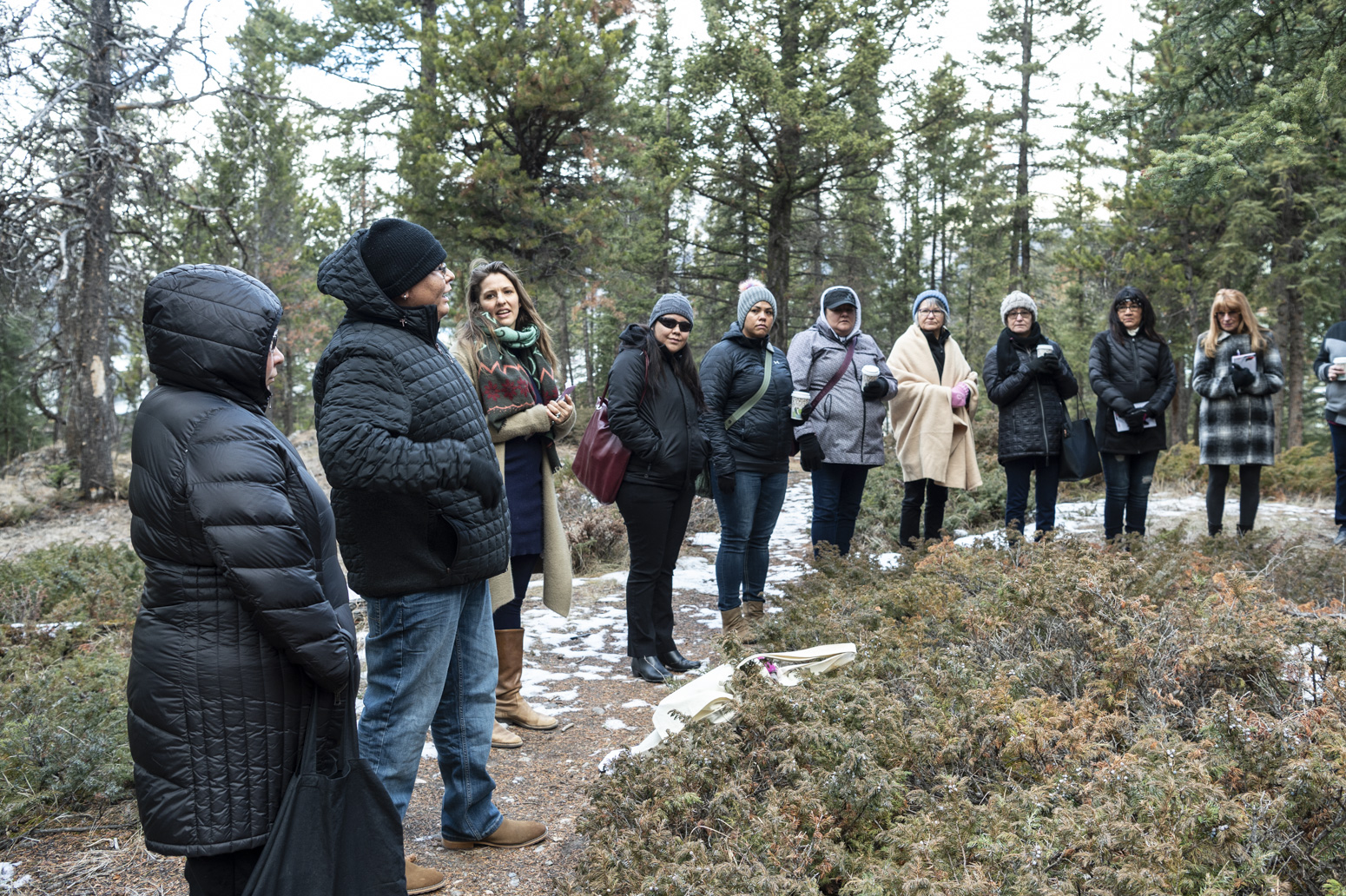
Dreaming Forward is a concept that involves envisioning and planning for the future. It refers to setting goals, ambitions and aspirations for the future and actively working towards making them a reality. This program uses the concept of Dreaming Forward to encourage individuals to think beyond their current circumstances and challenges to create a vision for a better future for Indigenous children, families, and communities.
Dreaming Forward: Exploring Pathways to Child Welfare Jurisdiction invites a diverse group of participants for learning and discussion focused on Indigenous child welfare. Participants will gain a deeper understanding of the complexities surrounding Indigenous child and family well-being and acquire practical tools, resources, and strategies to effect positive change for their communities. Join us for transformative learning, collaboration, and inspiration as we Dream Forward.
Description
This program creates a space for open dialogue, knowledge-sharing, and collaborative problem-solving, where traditional Indigenous perspectives and emergent approaches to child welfare jurisdiction will be explored. Deep learning and skill development will be fostered through story telling, presentations, interactive workshops and group discussions.
With guidance from the Elder, participants will share traditional and spiritual wisdom while connecting with the land and cultural teachings.
By grounding themselves in Indigenous cultural practices, participants will explore a range of topics, including:
- Dreaming new possibilities.
- Current child welfare landscape.
- Exploring pathways to exercise jurisdiction.
- Planning, community engagement, and capacity building.
- Introduction to law-making.
This program does not count towards a Certificate of Indigenous Leadership, Governance, and Management Excellence.
Eligibility
This program is intended for those individuals or advisors who are:
- responsible for visioning, developing, negotiating, leading, governing, and/or implementing the future of well-being for Indigenous children and their families wherever they live.
- seeking to explore opportunities and options for exercising jurisdiction in child and family well-being.
- child and family wellbeing-centered.
- building stronger, healthier, and more resilient children and families.
Priority is given to Indigenous learners and those working for Indigenous communities and organizations. Applicants must be 18+ at the start of the program.
Inclusivity Statement
We welcome applicants of all ages (18+), backgrounds, gender identities and expressions to apply.
Itinerary
Participants are required to dedicate approximately 40 hours during the week to this program.
Schedule
- Starts Sunday, 5:30 pm with dinner
- Monday to Thursday, 8:30 am to 5 pm
- Finishes Friday, 1:30 pm after lunch
Each day will open with a smudge and teachings and close with a daily wrap-up.
Expectations
- Complete pre-program assignments (approx. 4 hours)
- Participate in daily sessions, Sunday through Friday, according to the agenda.
- Complete homework outside of class time (approx. 2-4 hours)
Schedule is subject to change.
Faculty
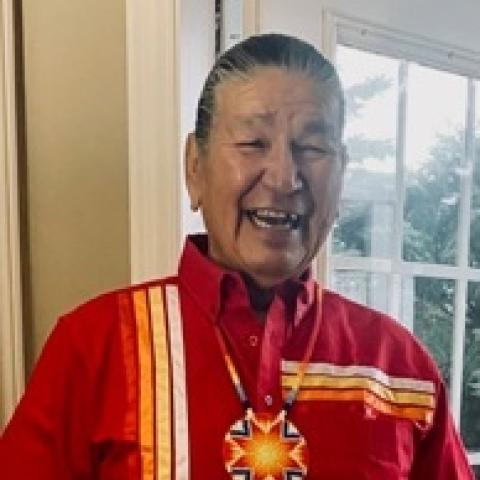
Uncle John Rice
Zahgausgai “Sun Ray”, Mukwa “Bear Clan”, is an Ojibwa and a 3rd Degree member of the Three Fires Midewiwin Society. John’s home community is Wasauksing First Nation near Parry Sound, Ontario. John’s childhood was rich in stories of his people; his Midewiwin Education began in 1982 and is ongoing. He has made it a life passion to study the “Mlikaans” Teachings which are about the whole development of the human before, during and after life. John is a Storyteller, Big Drum Carrier, Ceremonialist, Singer and Dancer. His greatest joy is watching Ojibwa youth learn and practice the culture. John generously shares his knowledge throughout Ontario. He currently works as an Elder and Knowledger Keeper at Dnaagdawenmag Binnoojiiyag Child & Family Services and is woven across many organizations. Nationally he is a founder of Feather Carriers: Leadership for Life Promotion and has carried many different roles in his life from being a young Chief for his community bringing the culture forward, to moving out into different teams, from the Early Psychosis Intervention Team at Canadian Mental Health Association as a Healer to an Elder/Healer at the Mental Health Centre in Penetanguishene and Fenbrook Medium Institution. He lectures and shares teachings in various orgnaizations and learning institutions. John travels internationally and is a well-respected teacher and elder in the Anishinaabe Nation.
Elder
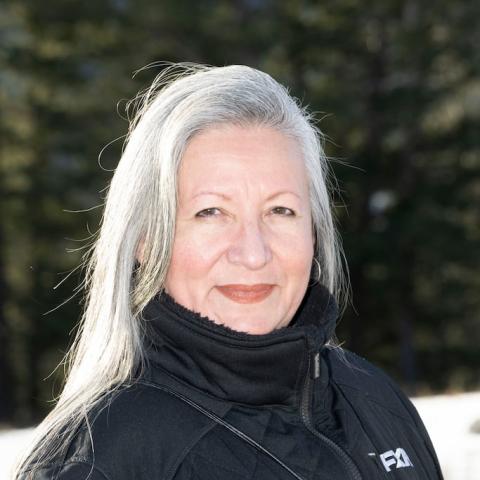
Marlyn Bennett
Dr. Marlyn Bennett, PhD, is an Associate Professor and Tier II Canada Research Chair in Indigenous Children’s Wellbeing at the University of Calgary’s Faculty of Social Work and Werklund School of Education.
A proud member of Sandy Bay Ojibway First Nation, Marlyn has over two decades of experience working with both Indigenous and non-Indigenous governments, organizations, and communities in senior academic and research roles. Her interdisciplinary research explores the lived experiences of Indigenous women and youth in the child welfare system, employing qualitative methodologies such as narrative inquiry, photovoice, and arts-based approaches. She is dedicated to advancing culturally safe practices and integrating Indigenous perspectives into social services, focusing on areas impacted by colonization.
Marlyn has led research initiatives addressing sexual violence, digital storytelling, and the intersections of health and child protection services. Marlyn’s leadership includes serving as the former National Director of Research and Principal Editor-in-Chief of the First Peoples Child & Family Journal. She has published extensively in peer-reviewed journals and co-edited key works on Indigenous child welfare. Her contributions to policy and practice development have shaped systemic changes in child welfare.
Recognized for her work, Dr. Bennett has received the 2024 Faculty of Social Work Research Innovation Award.
Faculty
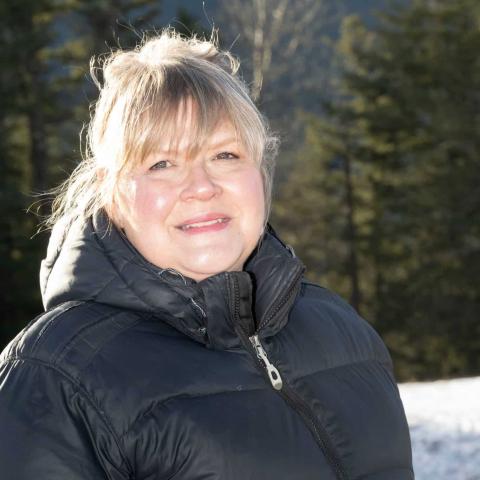
Eva Coles
Eva Coles has been in service to Indigenous communities for over 35 years both in urban and rural settings. She is known for her Eagle eye and warm approach when working with families and communities.
Eva has a BA in First Nations studies, MA in Organizational Leadership, and is a Certified Executive Coach. She is the 2019 Recipient of the Cindy Blackstock Award of Excellence in Indigenous Child Welfare. She and her team have won 2 awards for Innovation in Child Welfare.
Eva has been a Keynote Speaker at National Conferences, podcasts with Kempe Centre for Families as well as being featured on CBC Unreserved with Rosanna Deerchild.
In leadership roles, Eva has been the CEO for Metis Commission for Children and Families of BC, ED of Secwepemc Child and Family Services and CEO of Chief Red Bear Children’s Lodge. She was one of the leads for the Coordination Team to bring Cowessess First Nation to become the first nation in Canada to sign a C92 Jurisdictional agreement.
In 2024, Eva was on the Support Team for Cowichan Tribes who completed their jurisdictional agreement
Faculty
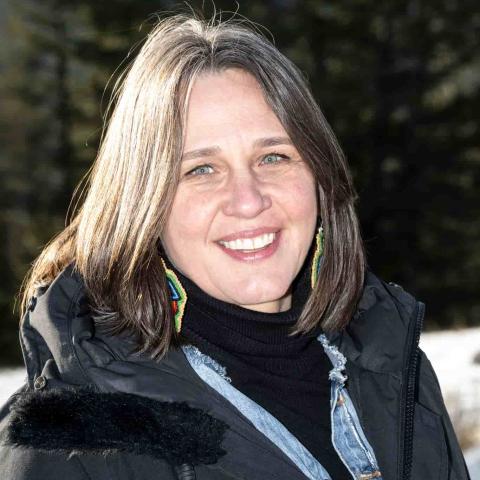
Shannon Crate
Shannon Crate, Ma'iingaans, is an Anishinaabe kwe from the Chippewas of Georgina Island First Nation. For 28 years, she has served as the Child and Family Wellbeing Manager and Band Representative for her community, promoting positive change in Native Child Welfare and family services.
A Feather Carrier teacher, IADR facilitator, and storytelling educator, Shannon draws on teachings from her parents, elders, ancestors, and children to guide her work. She shares lessons learned through storytelling, including insights gained from the inquest into the death of Devon Freeman, emphasizing life promotion and holistic healing.
Shannon holds a Masters of Social Work from Wilfrid Laurier University (Indigenous Field of Study) and a Bachelor of Social Work from Toronto Metropolitan University. She was instrumental in developing Dnaagdawenmag Binnoojiiyag Child and Family Services, regional protocols, and customary care homes that set many standards for respectful collaboration between Children’s Aid Societies and First Nations.
Before returning to her community, Shannon worked in Vancouver with Squamish Nation and the Native Court Workers Association, where she also created the first Native Circle Sentencing Program for the Attorney General’s Office of B.C.
Shannon trains CAS staff, mental health professionals, and educators in Indigenous wholistic helping and emphasizes the importance of storytelling in personal growth and professional practice. She and her husband of 30 years share two daughters and a pack of rez dogs, reflecting her deep connection to family and community.
Faculty
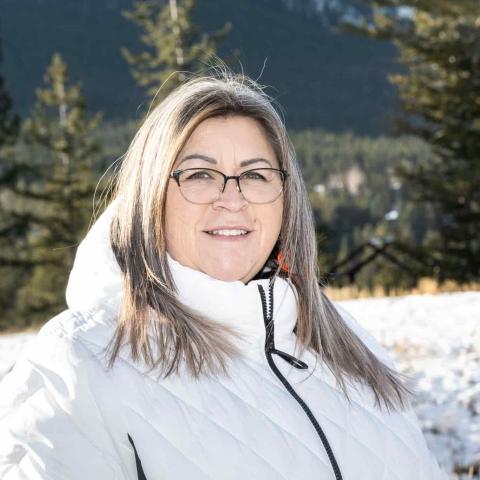
Amber Crowe
Amber is a member of the Mississaugas of Rice Lake, Alderville First Nation, where she has lived for over 35 years. She is a wife, mother and grandmother. She has served as the Executive Director of Dnaagdawenmag Binnoojiiyag Child &Family Services, a large Indigenous Child and Family Well Being Agency in south central Ontario since 2014.
With an honours BA in Public Administration and Governance from Ryerson University (’06), a Juris Doctor of Laws degree from University of Toronto Faculty of Law (’06), and a Masters of Social Work from Laurier (’17), Amber has spent most of her career working for Indigenous people and communities, including eight years of law practice before joining Dnaagdawenmag Binnoojiiyag.
Amber believes strongly in the restoration of jurisdiction to Indigenous peoples to look after their own children, and also has a strong commitment to reconciliation. She believes and advocates for a wholistic approach to balanced healing for children, youth, families, communities and nations. She is currently the President of the Board for the Association of Native Child and Family Service Agencies of Ontario (ANCFSAO), and an Expert in Residence for the Child Welfare League of Canada, and a former Board member of the Ontario Association of Children’s Aid Societies (OACAS). Amber has been called upon to provide expert evidence with respect to Indigenous Child and Family services in Ontario and believes in a brighter future.
Faculty
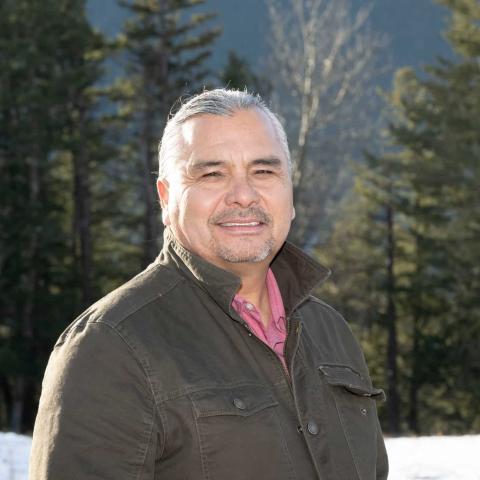
Kirby Redwood
Kirby Redwood is Saulteaux-Cree from Cowessess First Nation and has called Moh'Kinsstis (Calgary) his home for over 50 years. He has been involved in the social services sector as a professional and volunteer since 1988. He has served in areas of children services, justice, adult education, and social services.
Holding a BA in Justice Studies, MAL in Leadership, and an MBA, Kirby values the role of formal education and the possibilities this path offers in relationship to his traditional ways of knowing and being. When we respectfully parallel Indigenous worldviews to Western worldviews we create opportunities for ethical space to emerge, and from there we open the doors to personal and community wellness.
As the Lead Oskâpêwis (CEO) at Miskanawah, Kirby takes great pride in being part of a learning organization that contributes to community as a social change agent and creates opportunities for the voices not always heard… to be heard. Kirby’s passions are his desire to make positive change within himself and the community he works and lives in. With a focus on strengthening and changing the narratives and perspectives of Canada’s Indigenous peoples, to one’s that more accurately reflect who we are as Turtle Islands first peoples.
Faculty
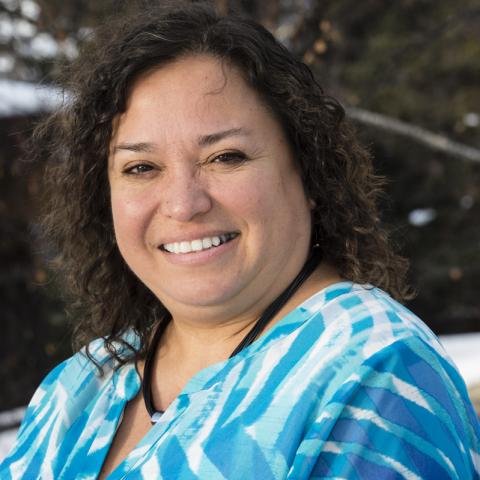
Tracey O’Donnell
Tracey O’Donnell is an Anishinabekwe from Red Rock Indian Band located north and east of Thunder Bay, Ontario. She has practiced law in Ontario for 30 years. Her practice is focused entirely on providing legal services to First Nations, their members, and their organizations.
Currently, Tracey is in private practice with an office at Nipissing First Nation. Tracey has worked with First Nations across Canada to support community and capacity development, including facilitating the drafting of First Nation constitutions, strategic planning, drafting First Nation laws, developing community consultation and communications plans, among other things.
In May 2005, Tracey argued on behalf of the Native Women’s Association of Canada, the Women’s Legal Education and Action Fund, and the Disabled Women’s Network of Canada: at the Supreme Court of Canada in the first Indian residential school case that reached the Supreme Court of Canada – Blackwater v. Plint.
Tracey was an elected Bencher of the Law Society of Ontario from 2003 to 2007 – the first Indigenous woman elected since the Law Society was founded in 1797. Tracey has volunteered on a variety of community-based committees and Boards of Directors and with CESO. Tracey earned her Honours B.A. in Political Science from Laurentian University, Sudbury, Ontario in 1990, and her L.L.B./J.D. from Osgoode Hall Law School, York University, Toronto, Ontario in 1993.
Faculty
Technical Requirements
What's Included

Accommodation
Read more
Close
Your program fee includes a single bedroom on the Banff Centre campus for the duration of your program.
Get connected with other participants on campus and focus on your projects while we take care of the day-to-day essentials.

Meal Plan
Read more
Close
Using a credit-based system to dine on campus, our flexible meal plan allows you to select meals according to your own needs.
Vistas Dining Room is pleased to offer all arts and leadership participants a 40% discount on all meals.
Banff Centre can respond to most dietary requests. In advance of your arrival, please contact Participant Resources if you have special dietary needs. A medical report from your doctor is required prior to arrival for any medical condition that warrants opting out of the Meal Plan.

Group Seminars/Workshops
Read more
Close
Join in group seminars/workshops.

Banff Centre Amenities
Read more
Close
- Participant Resources: Enrich your experience and get to know other artists on campus by taking advantage of the activities and support provided.
- Sally Borden Fitness and Recreation Centre: Your program fee includes free access to the swimming pool, climbing gym and fitness equipment.
- Box Office Discounts: Enjoy special artist rates or complimentary access for ticketed performances.
Fees & Financial Assistance
Application Fee
$35 application is included in the program fee.
The application fee is non-refundable. 100% of this fee goes towards the cost of administering the application.
Funding
Limited funding is available to help some participants with program fees.
- Funding is available for Indigenous participants or those working for Indigenous communities and organizations.
- Requests are reviewed based on submission of the Financial Assistance form available in the Student Portal.
- Funding amounts vary and do not cover 100% of the program fee. Participants should expect to pay a minimum of 25% of the program fee.
- Participants may be eligible for a maximum of two programs per year.
Steps to follow
- Select "Yes" to "I would like to apply for financial assistance" during registration.
- Log into your Student Portal to complete your funding application form within 48 hours of submitting your initial registration.
- Timely submission of the funding form is required in order to be considered.
Cancellations
All participants must pay a confirmation fee of $262.50 within fourteen days of registration. We reserve the right to cancel registrants if payment and confirmation is not received within fourteen days.
Participants who are awarded financial aid who cancel their registration may be ineligible to receive Banff Centre funding for a period of 12 months.
Registrations are non-transferable and cannot be applied to different programs or used on behalf of other registrants.
More information about our cancellation policy can be found here.
Tax Information
Banff Centre will issue official tax receipts for eligible tuition fees and all financial assistance and awards as required by the Income Tax Act. You will receive a T2202 (Tuition and Enrolment Certificate) for eligible tuition fees paid and a T4A (Statement of Pension, Retirement, Annuity, and Other Income) for applicable financial assistance and awards.
How to Apply
Learn more about the steps to Complete Your Application.
Step 1:
Complete the Online FormIf you have requested financial assistance,please ensure that you log in to your Student Portal within 48 hours of registration, to submit your funding request form.
If you do not require financial assistance, please ensure that you log in to your Student Portal and complete confirmation of attendance and full payment as soon as possible, but no later than 7 days from completing step 1.
Note that non-completion within the timelines stated may result in your place being offered to the waitlist.
Disclaimer
All programs, faculty, dates, fees, and offers of financial assistance are subject to change. Program fee is subject to applicable taxes. Non-refundable fees and deposits will be retained upon cancellation. Any other fees are refunded at the discretion of the Banff Centre. The application deadline is 11:59 p.m. Mountain Standard Time.